What Are the Top Medical Kit Types in 2026?
In 2026, choosing among medical kits is less about finding the biggest box and more about matching supplies to real risks. A compact home kit may cover minor cuts, burns, and routine family needs. A workplace kit must be easy to locate and clearly organized. Travel and outdoor kits face different demands: limited space, changing weather, and distance from professional care. Some kits are designed for specialized settings, where trained users and established protocols matter. The right choice depends on who may use it, where it will be stored, and how often its contents are checked.
Surgeon and writer Atul Gawande offers a useful principle in The Checklist Manifesto: “Checklists seem to provide a kind of cognitive net. They catch mental flaws inherent in all of us: flaws of memory and attention and thoroughness.” His point concerns checklists, not a specific medical kit, but it applies to readiness: an orderly kit is easier to inspect and use under pressure. Small details count. A readable contents list. Sealed supplies. Unexpired items. This guide compares the leading medical kits types in 2026, including home, workplace, travel, outdoor, and specialized options. It will also consider portability, organization, and the importance of matching kit contents to user skill and intended use. No kit is perfect. A common mistake is to focus on buying supplies while overlooking training, replenishment, or the needs of the people who may rely on them.
How Medical Kits Are Defined and Classified in 2026
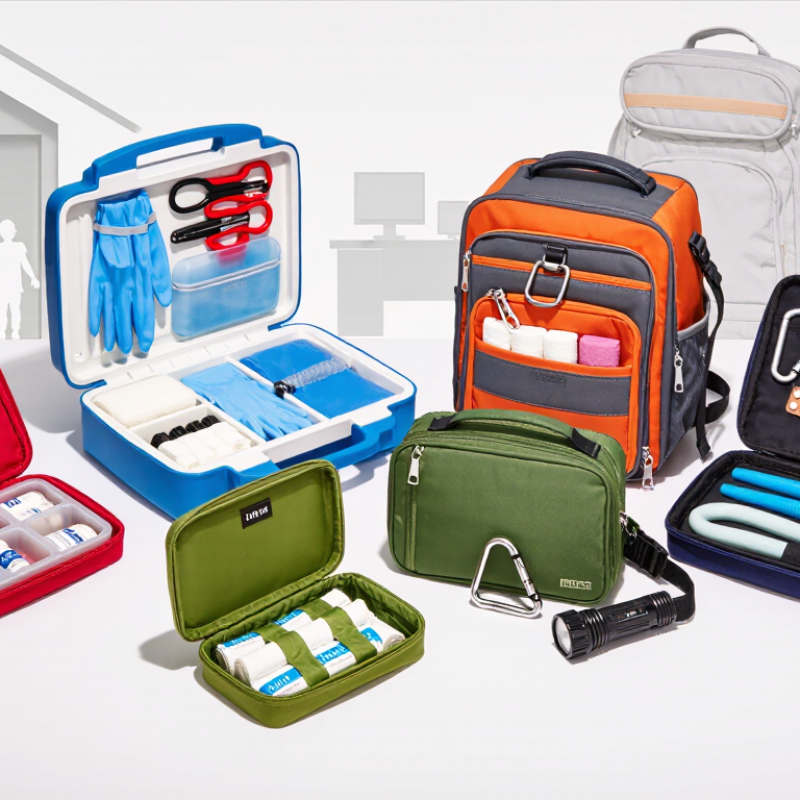
In 2026, a medical kit is best defined by its intended user, setting, and level of care—not by its container. A home kit supports minor, routine needs; a workplace kit reflects site hazards and staff training; a vehicle kit must tolerate heat, cold, and movement. Emergency-response kits may include supplies for more serious incidents, but they require appropriate training. Context matters.
This classification reflects real risks. The World Health Organization’s Global Status Report on Road Safety 2023 estimates 1.19 million road deaths each year and 20–50 million nonfatal injuries. The International Labour Organization’s 2023 estimates report 2.93 million annual work-related deaths and 395 million nonfatal work injuries. These figures are not kit-demand forecasts, but they show why one universal kit category falls short.
In practice, classify kits by hazard, user capability, portability, and replenishment needs. A neat label can still mislead: a “workplace kit” in a quiet office differs from one beside machinery. Review the contents against likely incidents, training, and local workplace procedures, and record expiry dates.
The boundary between categories is sometimes untidy. That is worth acknowledging.
First-Aid Kits for Everyday, Workplace, and Vehicle Use
What Are the Top Medical Kit Types in 2026?
First-Aid Kits for Everyday, Workplace, and Vehicle Use
A useful first-aid kit matches the place where it will be used. At home, keep adhesive bandages, gauze, medical tape, disposable gloves, and a small pair of scissors together. Store them somewhere adults can reach quickly, but young children cannot. Check expiry dates and replace opened supplies. Small details matter. A kit can look full while missing the one item you need.
Workplaces need supplies shaped by actual hazards, staff numbers, and access to trained responders. The U.S. Bureau of Labor Statistics reported 2.6 million nonfatal workplace injuries and illnesses in private industry for 2023. That figure does not predict a specific site’s risks, but it supports keeping supplies visible, stocked, and easy to locate. For vehicles, choose a compact, secured kit with gloves, gauze, bandages, and a thermal blanket. The National Highway Traffic Safety Administration recorded 40,901 U.S. traffic deaths in 2023; a first-aid kit cannot prevent crashes or replace emergency services. Still, it can help with minor injuries while help is on the way. I sometimes overlook the basics: kits need routine checks, not just a place in the cupboard or trunk.
Trauma Kits for Severe Injuries and Emergency Response
What Are the Top Medical Kit Types in 2026?
Trauma Kits for Severe Injuries and Emergency Response
Trauma kits are designed for serious bleeding and other urgent injuries, not everyday scrapes. In a roadside collision or workshop accident, minutes matter. A useful kit keeps key supplies visible, protected, and easy to reach, even in poor light. Clear labels help, but practice matters more.
Typical contents include medical gloves, sterile gauze, pressure dressings, trauma shears, and a tourniquet. Choose supplies that match the risks of the setting and the people likely to use them. A tourniquet should be used by someone trained to do so, following its instructions and local emergency guidance. Call emergency services promptly. Keep the kit stocked, and check packaging dates and damage regularly.
A compact pouch may suit a vehicle, while a larger workplace kit can support several responders. Store it where people can find it quickly, rather than buried under equipment. Training should cover scene safety, calling for help, and basic bleeding control. A kit can look complete and still fail when supplies are unfamiliar or missing. That detail is easy to overlook. No kit replaces professional medical care, and even a well-prepared response can feel imperfect under pressure.
Specialty Kits for Travel, Outdoor, and Clinical Needs
What Are the Top Medical Kit Types in 2026?
Specialty Kits for Travel, Outdoor, and Clinical Needs
Travel and outdoor kits are not interchangeable. A travel kit should reflect the destination, trip length, and personal health needs. CDC Yellow Book guidance recommends packing routine medicines and basic first-aid supplies suited to the trip. For a long flight, keep medicines, blister dressings, and oral rehydration salts easy to reach. For a hike, add wound-cleaning supplies, a compression wrap, and an emergency blanket. Keep it practical. WHO estimates that injuries cause 4.4 million deaths each year, nearly 8% of global deaths. That figure covers many causes, not just outdoor emergencies, but it underscores why preparation matters.
Clinical kits should match the procedure and care setting, with clearly arranged dressings, protective equipment, and hand-hygiene supplies. WHO’s 2022 Global Report on Infection Prevention and Control estimates that 7 in 100 patients in high-income countries and 15 in 100 in low- and middle-income countries acquire at least one healthcare-associated infection during acute care. A well-stocked kit cannot prevent every infection, but clean storage and regular checks support safer practice. Check expiry dates. Honestly, restocking logs are easy to neglect. That small task deserves attention too.
How Contents and Standards Differ Across Medical Kit Types
What Are the Top Medical Kit Types in 2026?
Medical kits differ by setting and purpose, not just size. A home first-aid kit may contain dressings, gloves, and simple tools for minor injuries. Small cuts need little. Workplace kits should reflect specific hazards, such as sharp edges or chemical splashes, and the number of people on site. Vehicle kits benefit from compact, secured contents that remain usable after heat and cold exposure. Trauma kits carry more specialized supplies, but those items require appropriate training.
Standards also vary. Some workplace requirements depend on local rules and risk assessments, while sterile procedure kits may be subject to medical-device requirements. There is no single contents list that suits every country or use. A kit’s label, instructions, expiry dates, and sterile packaging matter as much as the items inside. A kit can look complete and still be wrong for the person expected to use it.
Check supplies regularly. Replace damaged packaging and expired products, and make sure users know where the kit is kept. For remote sites, plan for longer waits before professional care arrives. More supplies are not always better; unfamiliar tools can create confusion. The right kit is one that matches the likely risks and the user’s training.