China’s surgical supplies sector spans large medical-device groups, specialist manufacturers, and export-focused factories. Their catalogs may include gloves, gowns, drapes, sutures, instrument sets, and sterilization products. Yet a broad catalog alone proves little. Buyers need to examine product specifications, quality controls, manufacturing capacity, and after-sales support. The details matter.
Surgeon and author Dr. Atul Gawande wrote, “Better is possible. It does not take genius. It takes diligence.” That idea offers a useful lens for comparing suppliers: careful checks matter more than polished claims. This guide explores manufacturers often considered by hospitals, distributors, and procurement teams, while noting that suitability depends on the product and intended market. Readers should verify current certifications, test reports, production arrangements, and traceability directly with each company. A certificate may cover only specific products or facilities. Not every supplier fits. Pricing, lead times, customization, and communication also deserve practical scrutiny. A sample that looks fine on a desk may reveal different details during handling or routine use. No ranking is definitive, and company information can change. That is the catch. The aim here is not to declare one universal winner, but to help readers ask sharper questions and compare evidence before making a purchasing decision.

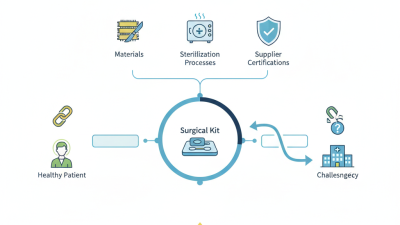
A surgical supplies manufacturer in China does more than assemble products. It controls material selection, production conditions, sterilization where applicable, inspection, and batch traceability. Think of a sealed dressing pack: its contents, packaging seal, and lot record should match the stated specifications. Small details matter. ISO 13485 provides a quality-management framework for medical-device production, while China’s National Medical Products Administration oversees product registration and supervision. A certificate alone, however, does not show how consistently a factory handles a failed inspection or a change in raw material.
Market growth makes these capabilities increasingly important. Grand View Research estimated China’s medical devices market at US$47.3 billion in 2023 and forecast a 6.8% compound annual growth rate from 2024 to 2030. This figure covers medical devices broadly, not surgical supplies alone. Buyers should therefore assess the specific product category, production capacity, sterilization controls, and documentation rather than rely on market size. Ask for sample batch records and evidence that packaging remains intact through handling. A supplier may look well organized during an audit, yet routine shifts can reveal gaps. The boundary between a manufacturer and a trading intermediary can also be messy, so verify who actually controls production and quality records.
Assessing leading surgical supplies manufacturers in China starts with product fit, not broad claims. Define the items, intended use, materials, sizes, and required sterile or nonsterile condition. Compare technical files, drawings, and sample units using the same checklist. Small details matter: seal width, needle finish, and label clarity can affect handling. Check the details.
Review quality systems and verify certificates with issuing bodies or official databases where available. Confirm that each certificate covers the actual site, product category, and current production scope. Ask for lot traceability, incoming-material controls, inspection records, and documented corrective actions. For sterile products, examine sterilization validation, relevant residual testing, package integrity, and shelf-life evidence. A tidy audit room is not enough. Observe line changeovers, calibration labels, and how staff isolate nonconforming batches.
Reliability also shows after shipment. Request realistic lead times, product-specific capacity, change-control rules, complaint response targets, and an example of a resolved quality issue with confidential details removed. Compare samples from multiple lots, not one carefully prepared set. Confirm the manufacturer can explain test methods and share consistent records. Still, no spreadsheet catches everything. A second visit or independent inspection may reveal gaps that documents miss. Do not treat a low price as proof of efficiency; thin evidence deserves another question.
| Assessment Dimension | Suggested Weight | What to Verify | Evidence of a Strong Manufacturer | Warning Signs |
|---|---|---|---|---|
| Regulatory authorization | 20% | Confirm the product’s NMPA status and its applicable device classification. In China, Class I devices are generally subject to filing; Class II and Class III devices generally require registration. | Current records can be matched to the exact product, manufacturer, intended use, and manufacturing site. | Registration details cannot be independently checked, or the documents cover a different product or legal entity. |
| Quality management system | 15% | Check for a current ISO 13485 certificate and confirm its scope, issuing body, covered sites, and validity. | The certificate’s scope covers the relevant medical-device activities and is verifiable with the issuer. | A certificate is expired, unverifiable, or does not cover the products or site being offered. |
| Product compliance and intended markets | 15% | For EU sales, check applicable conformity documentation under Regulation (EU) 2017/745 (MDR). For U.S. sales, verify relevant FDA establishment registration and device listing requirements. | Market-specific documentation identifies the product, intended use, manufacturer, and applicable regulatory route. | FDA registration or listing is described as FDA approval; documents are generic or do not match the product. |
| Sterilization validation | 15% | For sterile products, identify the sterilization method and review applicable validation evidence, such as ISO 11135 for ethylene oxide, ISO 11137 for radiation, or ISO 17665 for moist heat. | Validation and routine monitoring records correspond to the product, process, and sterilization facility. | Sterility claims are made without process-specific validation or traceable monitoring records. |
| Biocompatibility and material control | 10% | Review risk-based biological evaluation for patient-contacting materials, using the applicable parts of the ISO 10993 series. | Material specifications, supplier controls, and evaluation records correspond to the finished device and its contact conditions. | Test reports relate only to raw materials or a different product and are presented as complete finished-device evidence. |
| Sterile barrier and packaging | 10% | For sterile devices, review packaging validation and maintenance against applicable requirements, including ISO 11607 where relevant. | Packaging records address sealing, packaging materials, and maintenance of the sterile barrier through the stated shelf life. | Shelf-life or sterile-barrier claims lack supporting validation for the finished packaging system. |
| Manufacturing controls and traceability | 10% | Assess production controls, inspection records, lot or batch traceability, nonconformance handling, and change control. | Sample records connect incoming materials, production, inspection, release, and finished-product lots. | Traceability stops at the finished carton, or production changes are not documented and controlled. |
| Supply reliability and commercial fit | 5% | Compare confirmed capacity, lead times, minimum order quantities, product specifications, and change-notification arrangements. | Written commitments are supported by production planning and consistent product specifications. | Capacity claims are unsupported, or substitutions and specification changes are not disclosed in advance. |
How to use this table: Apply the suggested weights to each shortlisted manufacturer using evidence verified for the specific product and manufacturing site. The weights are a comparison framework, not an official ranking. Regulatory requirements vary by product and destination market; verify current records with the relevant authority or certification issuer.
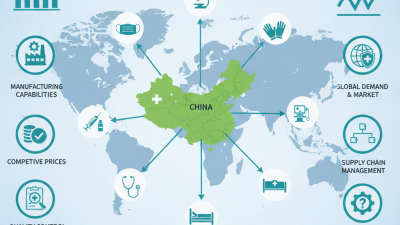
China’s surgical-supplies leaders are best identified by manufacturing depth, not advertising. The China Medical Device Blue Book 2024 put the country’s overall medical-device market above RMB 1.2 trillion in 2023. That figure covers far more than surgical supplies, but it shows the scale of the industrial base.
Within this field, established manufacturers typically combine sterile consumables, precision instruments, and dependable hospital supply. Look for documented sterilization validation, traceable production batches, and consistent delivery during demand surges. The National Medical Products Administration’s regulatory framework also makes product registration and quality controls essential checks. Strong export experience can signal mature documentation, though it does not guarantee suitability for every hospital.
Details matter. A sealed sterile pack, clear lot number, and intact instrument hinge reveal practical quality more than a glossy catalogue. Procurement teams should compare defect rates, lead times, and technical support alongside price. Scale helps, but it can conceal uneven service. I would not rank manufacturers from market size alone; public data rarely separates surgical supplies cleanly from the wider device market.
China’s surgical supplies manufacturers vary widely in the products and processes they specialize in. Some focus on disposable items, such as sterile gowns, gloves, drapes, gauze, and procedure kits. Others concentrate on reusable instruments or sterilization packaging. Their differences often show up in practical details: fabric weight, instrument balance, seal strength, and how clearly each item is labeled.
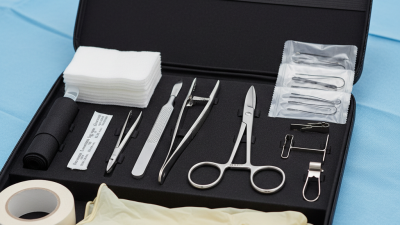
Manufacturers with focused production lines may offer more consistent specifications and useful customization. For example, a procedure kit can be assembled around a clinic’s preferred mix of drapes, swabs, and trays. Reliable suppliers should be able to explain material choices, inspection steps, and batch traceability. Claims alone are not enough. Ask for product specifications and quality records, then assess samples under realistic handling conditions. Packaging that looks neat may still be difficult to open with gloves.
Tips: Check sterility information, packaging integrity, and instructions before purchase. Compare samples across batches when possible. Details matter. A supplier may excel in one category but be less suitable for another, so match its proven specialty to the intended use.
For Chinese surgical-supply manufacturers, ranking depends less on factory size than on evidence buyers can verify. ISO’s 2022 Survey of Management System Certifications recorded more than 30,000 valid ISO 13485 certificates worldwide. That figure shows broad adoption, not safer products by itself. Buyers should check audit dates, corrective-action records, and whether certificates cover the actual factory and product family. A certificate on the wall is not enough. Sterile packs, needle hubs, and tubing require lot traceability, validated processes, and clear complaint handling. Numbers need context: ISO counts certificates, not recalls, field failures, or delivery reliability.
Export strength is equally practical. UN Comtrade’s HS 9018 series tracks trade in medical, surgical, and dental instruments, helping buyers compare export flows over time. But trade data indicates market reach, not whether shipments met destination requirements or arrived on schedule. Ask suppliers for recent shipment records, market registrations, packaging tests, and delivery-time history. Compare lead-time variation, not just quoted prices. Even capable exporters can face delays when material lots change or sterilization schedules slip. That caveat matters. Strong rankings should reflect consistent quality records, traceability, and export performance across repeat orders—not just during an audit.
© 2025 Henleys Medical Supplies | Website Cookies & Privacy Policy | Company Privacy Notice | Terms of Sale | Cancellation & Returns | Company Reg No. 452882 | Vat No. GB229 2540 68 | Web design by Cariad Marketing