Choosing reliable medical equipment suppliers is rarely as simple as comparing prices online. Global buyers must examine product quality, regulatory documentation, delivery performance, and long-term service. A low quotation may hide costly maintenance, unclear warranties, or missing calibration records. The right supplier should provide transparent specifications, traceable manufacturing information, and practical support after installation.
This guide introduces ten suppliers serving international healthcare markets, from hospitals and diagnostic centers to mobile clinics. Each company is considered through professional criteria, including product range, quality controls, certifications, logistics experience, and customer support. Details such as response time, spare-parts availability, packaging standards, and training can strongly affect daily clinical operations. A ventilator delayed at customs is not merely an inconvenience. It can disrupt patient care.
Evidence matters.
The ranking should not be treated as universal. A supplier suitable for a large European hospital may not fit a rural clinic requiring simple devices and local technicians. Information can also change as product lines, certifications, and distribution agreements develop. That limitation deserves attention. Buyers should verify current documents, local import requirements, warranty terms, and independent references before signing contracts.
The goal is practical guidance, not exaggerated promotion. By comparing these medical equipment suppliers with a careful, experience-based approach, global purchasers can reduce avoidable risks and make decisions that support safe, dependable healthcare delivery.
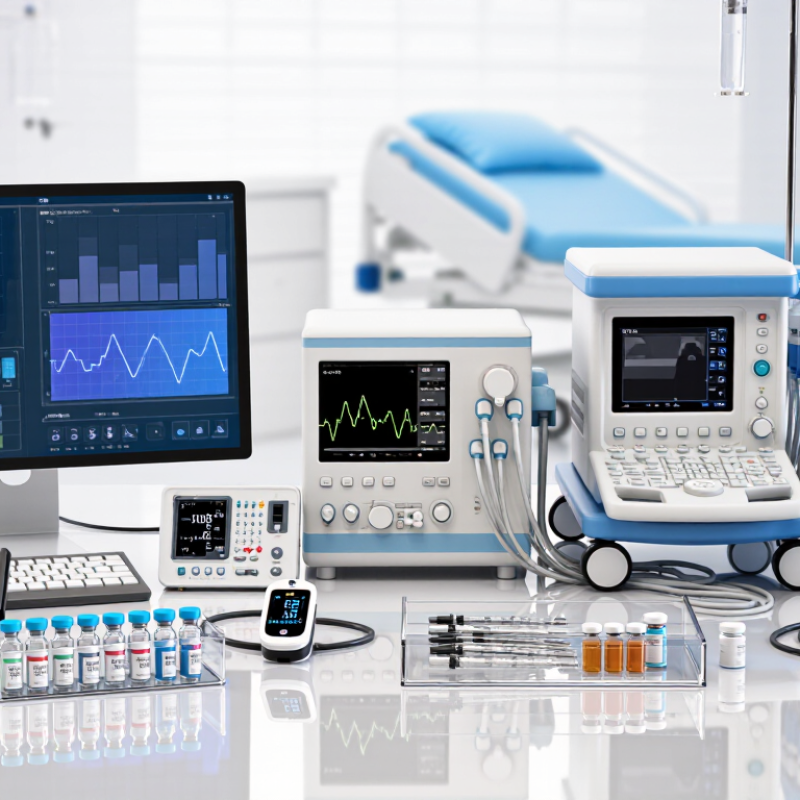
Global buyers need more than a product catalogue from medical equipment suppliers. The strongest suppliers provide diagnostic imaging, patient monitoring, laboratory systems, surgical tools, sterilization units, and rehabilitation equipment. They also offer installation, operator training, spare parts, and preventive maintenance. According to the World Health Organization’s Global Atlas of Medical Devices, the market includes more than 10,000 device types and about 1.5 million different medical devices. This variety makes technical guidance essential.
Reliable suppliers support international procurement with product specifications, risk classifications, quality certificates, and clear user manuals. They should explain electrical standards, language options, shipping conditions, and local registration requirements. The OECD’s Health at a Glance 2023 reported that health spending averaged 9.2% of GDP across OECD countries in 2022. Buyers therefore need equipment that controls long-term service costs, not only the initial purchase price. A low quotation can hide expensive filters, software updates, or unavailable parts.
Experienced suppliers can also provide remote diagnostics, calibration records, validation documents, and response-time commitments. For hospitals in regions with unstable power, voltage protection and battery performance deserve close attention. For rural clinics, simple interfaces and local training may matter more than advanced features. Some supplier claims still rely too heavily on brochures. That is a weakness. Buyers should request installation references, maintenance data, warranty terms, and independent performance evidence before signing a contract. WHO’s Medical Devices Technical Series also stresses lifecycle management, yet many purchasing teams still evaluate devices only at delivery.
Choosing among the top 10 medical equipment suppliers for global buyers requires more than comparing prices. Start by checking product classifications, quality-management certifications, export experience, and destination-market registrations. Ask for complete technical files, calibration records, warranty terms, and maintenance procedures. A reliable supplier should explain production controls clearly, not hide behind polished brochures. Request samples when practical, then assess accuracy, packaging, labeling, and user instructions.
Supplier evaluation also depends on communication after purchase. Test response times with detailed questions. Confirm spare-parts availability, training options, installation support, and emergency service channels. Speak with verifiable customers in similar healthcare settings. Factory videos help, but an independent audit provides stronger evidence. No evaluation is perfect. A spreadsheet may still miss cultural misunderstandings, delayed updates, or weak field support. These risks deserve attention.
Tips: Build a weighted scorecard before contacting suppliers. Give quality and service higher scores than low pricing. Verify certificates directly with recognized issuing bodies. Compare two or three quotations using identical specifications. Record every promise in the contract, including delivery milestones, acceptance testing, documentation, and corrective-action procedures. Keep a small pilot order where possible. It may cost more initially, but it exposes practical weaknesses before a large purchase.
Ranking medical equipment suppliers requires more than comparing catalog prices. The World Health Organization reports over two million medical device types across more than 7,000 generic groups. This complexity makes product classification, intended use, and regulatory documentation essential ranking criteria.
Quality evidence should come before sales claims. Buyers should verify ISO 13485-based quality systems, device registration, recall procedures, and batch traceability. They should also request test reports, calibration records, and sample documentation. Evidence matters. The World Bank’s 2023 Logistics Performance Index compares 139 economies across customs, infrastructure, delivery reliability, and tracking. These indicators support practical checks on supplier performance. Ask for shipment records, average response times, spare-parts availability, and installation support.
Total cost deserves careful measurement. Include freight, training, maintenance, software updates, warranty limits, and expected downtime. A low purchase price may become expensive after repeated service delays. Suppliers should explain lead times under normal and disrupted conditions. They should also provide local technical contacts and clear escalation procedures. However, no ranking is perfectly neutral. Hospital size, climate, clinical workload, and local regulations can change the result. A supplier with strong export experience may still lack reliable after-sales support in a smaller market. Buyers should score every criterion with documented evidence, then review the scoring when new service data appears.
Sources: World Health Organization, Medical Devices Fact Sheet; World Bank, Logistics Performance Index 2023.
The leading supplier profiles cover ten practical specialties: imaging, patient monitoring, surgical instruments, laboratory systems, sterilization, rehabilitation, emergency care, dental equipment, consumables, and hospital software. Each profile should show manufacturing capacity, service coverage, training quality, and regulatory documentation.
WHO reports more than two million medical device types worldwide, making comparison difficult. A strong supplier explains intended use, maintenance intervals, spare-part access, and clinical limitations in clear language.
OECD Health at a Glance 2023 reports that health spending across OECD economies averaged 9.2% of GDP in 2022. Buyers therefore need measurable value, not impressive catalogs. Check product registrations, ISO 13485 certification, warranty terms, calibration records, and delivery history.
WHO and UNICEF’s Global Report on Assistive Technology estimates that more than 2.5 billion people need assistive products. This supports closer attention to rehabilitation suppliers and local repair networks. Yet a ranking is never fully neutral. Price, shipping distance, service quality, and hospital infrastructure can change the result.
Tips: Request three comparable quotations. Ask for total ownership cost, not only purchase price. Test sample units when possible. Confirm voltage, software language, consumables, and staff training before payment. A low-cost device may become expensive when one missing part stops a ward. Supplier claims also need independent verification. Use inspection reports, customer references, and transparent performance data.
Global buyers should compare medical equipment suppliers with a clear, evidence-based process. A polished website proves very little. Request product specifications, quality certificates, test reports, and market approvals relevant to your destination. Check whether documents match the exact model, not only the product family. Ask about manufacturing capacity, inspection points, traceability, and complaint handling. Reliable suppliers answer specific questions without avoiding difficult details.
Price is only one part of the decision. Compare warranty terms, spare-part availability, delivery schedules, installation, training, and technical support. Calculate the total cost over several years. A lower quotation may become expensive when replacement sensors or maintenance are difficult to obtain. Speak with recent customers, when possible, and ask about response times during equipment failures. Small delays matter in hospitals.
Tips: Build a scorecard before contacting suppliers. Include quality, compliance, service, lead time, payment conditions, and communication. Test a sample or arrange a documented demonstration. Keep written records of every claim. A supplier who changes answers repeatedly deserves caution.
My experience suggests that supplier selection is rarely perfect. Forecasts can be wrong, and shipping conditions may change. I once underestimated local training needs, which created avoidable delays. That mistake still matters. Buyers should review risks with clinical, technical, procurement, and regulatory staff. Independent inspection can also expose weaknesses before shipment. Choose the supplier that provides dependable evidence, not the loudest promise.
| Rank | Supplier Profile | Core Equipment Categories | Typical Quality System | International Regulatory Support | Typical Export Capability | Indicative Lead Time | Typical Minimum Order | Warranty Benchmark | After-Sales Service | Best Fit for Global Buyers |
|---|---|---|---|---|---|---|---|---|---|---|
| 1 | Advanced Diagnostic Imaging Supplier | Ultrasound systems X-ray systems CT accessories | ISO 13485-based quality management; documented design controls and traceability are commonly expected. | CE-marking support and United States registration or clearance support where applicable; local importer documentation normally required. | Usually experienced with hospital tenders, distributor channels, installation planning, and international shipping documentation. | Approximately 8–24 weeks, depending on configuration and installation requirements. | Usually 1 complete system for capital equipment. | Typically 12–24 months for the main system; consumables and accessories may differ. | Remote troubleshooting, preventive maintenance plans, spare-parts support, and technical training. | Hospitals, imaging centers, public procurement projects, and multi-site healthcare groups. |
| 2 | Patient Monitoring Supplier | Bedside monitors Transport monitors Central monitoring | ISO 13485 or equivalent medical-device quality controls; electrical safety and software verification are important selection criteria. | Commonly provides technical files, declarations of conformity, labeling support, and market-specific registration documentation. | Often supports distributor sales across multiple regions with standardized product documentation and training materials. | Approximately 4–12 weeks for standard configurations; longer for networked systems. | Commonly 5–20 units, although single-unit evaluation orders may be available. | Typically 12–24 months, with separate terms for sensors, batteries, and cables. | Firmware updates, calibration guidance, user training, and replacement accessory programs. | General hospitals, intensive-care units, emergency departments, and temporary medical facilities. |
| 3 | Respiratory Care Supplier | Ventilators Oxygen concentrators CPAP equipment | Medical-device quality management with strong emphasis on risk management, alarm performance, and electrical safety testing. | Typically supports market-specific device registration, clinical documentation, labeling, and post-market surveillance requirements. | Frequently works with government agencies, humanitarian organizations, hospitals, and authorized regional distributors. | Approximately 6–16 weeks for standard products; emergency orders depend on available inventory. | Commonly 5–25 units for standard equipment; project orders may require higher volumes. | Typically 12–24 months, subject to usage conditions and battery or compressor coverage. | Application training, preventive maintenance, consumables planning, and technical escalation procedures. | Critical-care programs, home-care providers, emergency response, and respiratory clinics. |
| 4 | Laboratory Diagnostics Supplier | Analyzers Sample preparation Laboratory consumables | ISO 13485 is common for devices; laboratories may also require documented reagent and quality-control procedures. | Usually provides product dossiers, performance data, safety data, labeling files, and support for local registration. | Often has established cold-chain, customs, and distributor procedures for reagents and temperature-sensitive materials. | Approximately 3–12 weeks for instruments; recurring consumables may require scheduled replenishment. | One instrument is often possible; reagents may have pack-size or shelf-life requirements. | Typically 12–24 months for instruments; reagents are governed by expiry-date and storage terms. | Installation qualification, operator training, calibration support, quality-control guidance, and service contracts. | Clinical laboratories, hospitals, diagnostic networks, universities, and public-health programs. |
| 5 | Surgical and Operating-Room Supplier | Operating tables Surgical lights Electrosurgical equipment | Quality controls normally include material traceability, electrical safety testing, installation procedures, and risk management. | Commonly supplies declarations, installation manuals, technical files, and local compliance documentation through approved channels. | Typically handles project-based exports involving room layouts, site surveys, installation, and commissioning. | Approximately 8–20 weeks; complex operating-room projects may take longer. | Usually 1 system or project package; accessories may be ordered separately. | Typically 12–24 months, with optional extended service agreements. | On-site commissioning, clinical-user training, preventive maintenance, and replacement-part support. | Hospitals, ambulatory surgery centers, specialty clinics, and new facility projects. |
| 6 | Sterilization and Infection-Control Supplier | Steam sterilizers Washer-disinfectors Sealing equipment | Quality systems typically emphasize process validation, pressure-vessel safety, electrical safety, and maintenance records. | Usually supports conformity documentation, validation protocols, installation qualification, and local facility requirements. | Often experienced in institutional projects requiring site preparation, utility specifications, and commissioning. | Approximately 8–24 weeks, depending on chamber size, options, and site-readiness. | One unit or one complete processing line for project procurement. | Typically 12–24 months, with service coverage influenced by installation and maintenance conditions. | Validation support, operator training, service schedules, spare parts, and process documentation. | Hospitals, central sterile-service departments, dental facilities, and surgical centers. |
| 7 | Rehabilitation and Mobility Supplier | Patient lifts Wheelchairs Rehabilitation devices | Product safety, biocompatibility where relevant, load testing, usability evaluation, and production traceability are key checks. | Commonly provides conformity declarations, risk assessments, user instructions, and market-specific labeling. | Usually suitable for distributor networks, institutional procurement, and direct-to-provider orders. | Approximately 3–10 weeks for standard products; custom configurations may require additional time. | Often 1–10 units for evaluation or institutional orders. | Typically 12–24 months; batteries, cushions, and wearable components may have separate terms. | Assembly guidance, spare parts, fitting instructions, user training, and repair support. | Rehabilitation centers, elder-care facilities, home-care providers, and community health programs. |
| 8 | Dental Equipment Supplier | Dental chairs Treatment units Dental imaging accessories | Quality controls generally cover electrical safety, waterline hygiene, ergonomics, materials, and installation verification. | Typically provides product manuals, conformity files, technical specifications, and support for local registration where required. | Often exports through specialist distributors familiar with clinic installation and service requirements. | Approximately 6–16 weeks for treatment units; accessories may ship sooner. | Usually 1 complete unit or clinic package. | Typically 12–24 months for the unit; handpieces and consumables may follow separate policies. | Installation, dental-team training, maintenance schedules, spare parts, and troubleshooting support. | Dental clinics, teaching hospitals, outpatient centers, and healthcare facility projects. |
| 9 | Home-Healthcare Equipment Supplier | Nebulizers Home monitors Adjustable care beds | Quality management should address usability, household electrical safety, packaging integrity, and complaint handling. | Usually provides user-friendly labeling, technical documentation, conformity information, and local-market support materials. | Commonly supports e-commerce fulfillment, pharmacy distribution, healthcare distributors, and institutional contracts. | Approximately 2–8 weeks for stocked products; customized or bulky equipment may take longer. | Often 10–50 units, with lower quantities possible for selected standard products. | Typically 12–24 months, subject to product category and operating conditions. | Telephone or remote support, replacement programs, user instructions, and distributor training. | Home-care distributors, pharmacies, nursing services, insurance programs, and community health providers. |
| 10 | Medical Furniture and Facility-Systems Supplier | Hospital beds Examination tables Medical carts | Quality controls normally include load testing, mechanical safety, surface materials, electrical safety, and cleaning compatibility. | Commonly supplies product specifications, safety documentation, conformity declarations, and installation instructions. | Often handles container shipments, institutional tenders, facility projects, and regional distributor programs. | Approximately 4–14 weeks for standard items; large project orders may require phased delivery. | Usually 5–20 units; complete facility packages may require larger order volumes. | Typically 12–24 months, with separate coverage for motors, batteries, upholstery, and accessories. | Assembly, installation guidance, spare parts, maintenance training, and replacement-component support. | Hospitals, clinics, nursing homes, field hospitals, and healthcare construction projects. |

Comparison note: The figures shown are typical procurement benchmarks for supplier categories rather than claims about any specific company or brand. Global buyers should verify current certifications, product registrations, clinical evidence, warranty terms, service capacity, shipping conditions, and total landed cost before placing an order.
© 2025 Henleys Medical Supplies | Website Cookies & Privacy Policy | Company Privacy Notice | Terms of Sale | Cancellation & Returns | Company Reg No. 452882 | Vat No. GB229 2540 68 | Web design by Cariad Marketing