Why Are Medical Labels Essential for Global Procurement?
In the complex landscape of global procurement, medical labels serve a critical role. These labels ensure proper identification, handling, and compliance of medical products. Accurate medical labels enhance safety and efficiency across supply chains. Without them, errors can lead to severe consequences.
The importance of medical labels extends beyond mere identification. They provide essential information about product use, storage, and expiration. Clear labeling builds trust among healthcare providers and patients. It is crucial for maintaining transparency and accountability in the medical supply chain.
Despite their significance, challenges remain in label standardization. Variations in language and regulations can create confusion. Companies must navigate these complexities to ensure compliance. Striving for improvement in medical labels can enhance global procurement practices and ultimately safeguard patient health.
Importance of Medical Labels in Global Supply Chains
Medical labels play a crucial role in global supply chains, particularly in healthcare. They ensure that medical products are accurately identified and safely transported. A well-designed label communicates essential information, including ingredients, usage instructions, and safety precautions. This clarity is vital for healthcare providers who depend on accurate data to make informed decisions.
Inadequate labeling can lead to serious consequences. For instance, mislabeling a medication can cause dire health effects. Supply chain stakeholders must prioritize labeling to mitigate these risks. A comprehensive approach should include not only regulatory compliance but also understanding the end-user's needs. Fostering communication among manufacturers, distributors, and healthcare professionals can enhance label effectiveness.
Tips: Always verify the accuracy of information on medical labels. Regular training for staff involved in procurement can enhance awareness of labeling significance. In a global context, ensure familiarity with region-specific regulations.
Understanding Regulatory Compliance in Medical Labeling
Regulatory compliance in medical labeling is a complex yet crucial aspect for global procurement. Different regions have specific requirements. For instance, the European Union mandates that medical labels must include instructions that are clear and accessible to all users. According to a study by the International Medical Device Regulators Forum, non-compliance can lead to costly penalties, reaching up to $2 million for a single violation.
The World Health Organization emphasizes the importance of accurate labeling. Labels must convey crucial information about usage, potential risks, and contraindications. Inaccurate labeling can result in severe patient safety issues. In fact, a report by the U.S. Food and Drug Administration noted that improper labeling contributed to over 150 adverse events last year alone. This data highlights the need for stringent adherence to regulatory standards.
While technology aids in compliance, challenges remain. Inconsistencies in international regulations can burden manufacturers. For example, a label approved in one country might be rejected in another due to different guidelines. This scenario raises questions about the efficiency of current regulations. Industry experts believe that a unified framework could enhance safety and streamline global procurement, but achieving this is fraught with obstacles.
Importance of Medical Labels in Global Procurement
This chart illustrates the reasons why medical labels are critical for regulatory compliance in global procurement, highlighting key factors such as accuracy, safety, and legal requirements.
Effect of Accurate Medical Labels on Patient Safety
Accurate medical labels play a crucial role in ensuring patient safety. When healthcare professionals rely on labels, they expect clear information. Mislabeling drugs or equipment can lead to serious consequences. Instances of improperly labeled medications have resulted in adverse reactions and incorrect dosages. Such mistakes often stem from human error or poor labeling practices.
Consider the chaos in a busy hospital. A nurse may grab a vial without double-checking the label. If that vial contains the wrong medication, the patient's health is at risk. Training staff to recognize the importance of labels is essential. Yet, challenges remain in ensuring that labels are consistently accurate.
Reliable labeling extends to various medical products, not just pharmaceuticals. Surgical instruments must also have clear labels. Ambiguities in labeling can confuse operating room teams, complicating procedures. Regular audits and checks could enhance accuracy. There remains a need for improvement. Investing in robust labeling systems could prevent future errors and safeguard patients.
Why Are Medical Labels Essential for Global Procurement? - Effect of Accurate Medical Labels on Patient Safety
| Dimension |
Data Value |
Impact on Patient Safety |
| Label Accuracy (% Correct) |
98% |
Reduces medication errors significantly |
| Information Completeness (% Complete) |
95% |
Increases understanding of medication usage |
| Label Readability (Score out of 10) |
9 |
Enhances patient comprehension and adherence |
| Compliance with Regulations (% Compliance) |
100% |
Ensures legal and safety standards are met |
| Consumer Satisfaction (% Satisfied) |
90% |
Promotes trust in healthcare products |
Role of Medical Labels in Product Traceability and Recall
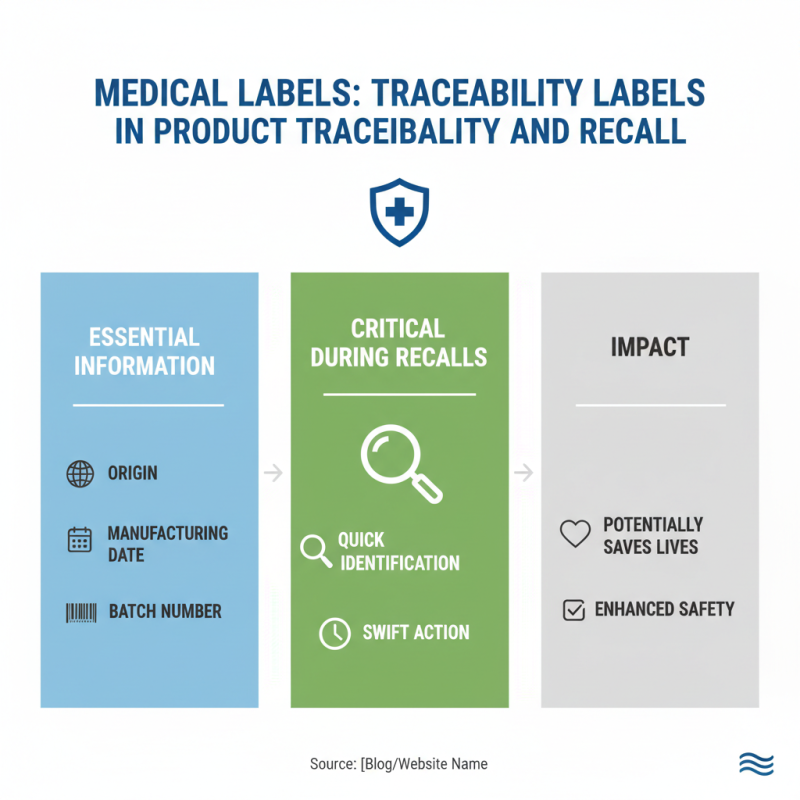
Medical labels play a critical role in product traceability and recall processes. They provide essential information about a product, including its origin, manufacturing date, and batch number. This information is vital during a product recall. Authorities and manufacturers need to quickly identify affected items. Precise labeling ensures swift action, potentially saving lives.
In the event of a product fault, clear medical labels assist healthcare providers in determining which items to pull from shelves. For instance, if a medical device is found to have a defect, labels help trace it back to the source. Detailed tracking can prevent further distribution of potentially harmful products.
Tips: Always check labels before use. Ensure they contain all necessary information. Keeping inventory up-to-date can also enhance safety.
Tracing products through accurate labels mitigates risks. However, labels can age poorly or degrade over time. It's crucial for organizations to review their labeling practices regularly. Continuous assessment ensures efficiency and safety in the healthcare supply chain. Every little detail matters in the quest for reliability.
Best Practices for Developing Effective Medical Labels in Procurement
Developing effective medical labels is crucial for global procurement. Accurate labels ensure that products are easily identified and understood by healthcare professionals. They must include essential information such as content, dosage, and expiration dates. Clarity can save time and prevent potential errors during product usage.
It’s important to engage with stakeholders when creating labels. Feedback from medical staff can highlight crucial details that should not be overlooked. Also, consider language variations. Not every region speaks the same language, and this can lead to misinterpretations. Visual aids, like symbols or icons, can bridge this gap.
Balancing thoroughness and simplicity can be challenging. Labels need to contain all necessary data without overwhelming users. Testing label designs in real-world scenarios can provide valuable insight. Receiving input from end-users can reveal flaws that may not be initially apparent. Confusion can stem from poorly designed labels. By prioritizing user experience in the design process, medical products can be utilized more effectively.