What is the Importance of Medical Instruments in Healthcare?
Medical instruments play a vital role in healthcare by ensuring accurate diagnosis and effective treatment. According to a report by Grand View Research, the global medical device market is projected to reach over $600 billion by 2024, indicating a growing reliance on these essential tools. Instruments like stethoscopes, MRI machines, and surgical tools are critical for various medical procedures.
Recent studies show that approximately 30% of medical errors stem from improper use of instruments. This highlights the need for proper training and maintenance in using medical instruments. With advancements in technology, newer instruments are increasingly sophisticated, yet they require skilled professionals to operate effectively. The balance between innovation and usability is paramount for ensuring patient safety.
Despite the advancements, challenges remain in equipping every healthcare facility with necessary instruments. Many regions still face shortages. Addressing this gap is crucial for improving healthcare outcomes. As the industry evolves, the importance of reliable medical instruments will continue to shape the future of healthcare delivery.
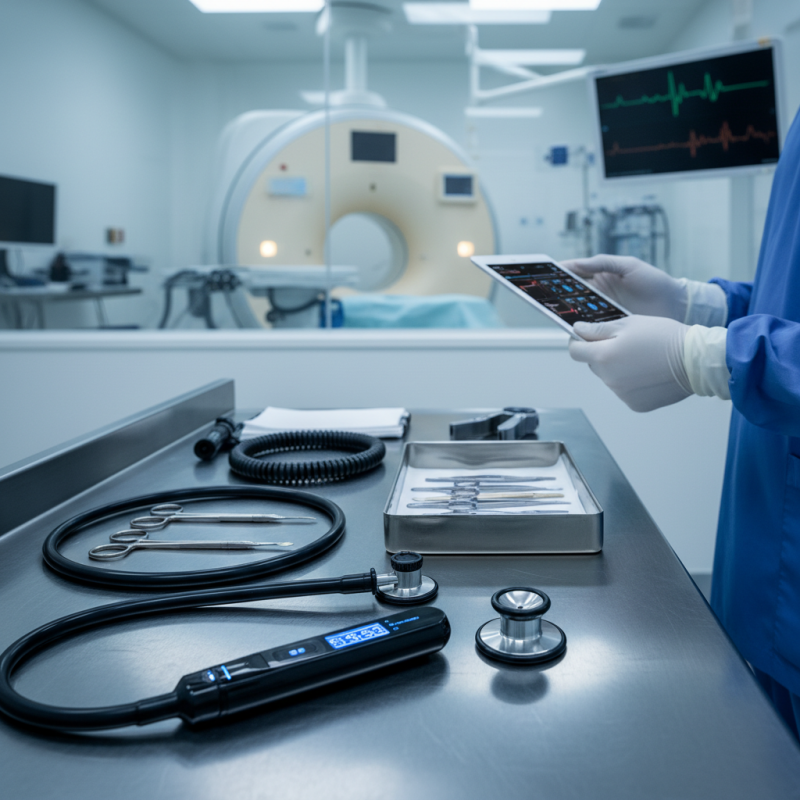
Importance of Medical Instruments in Diagnosing Health Conditions
Medical instruments play a critical role in diagnosing health conditions. They provide healthcare professionals with the necessary tools to observe, measure, and analyze patients' health. For instance, stethoscopes allow doctors to listen to heartbeats and breathing patterns. This can lead to early detection of heart disease or respiratory issues.
According to a report by the World Health Organization, effective diagnosis relies on quality medical instruments. Up to 70% of clinical decisions depend on accurate laboratory results. Errors in these processes can lead to significant delays in treatment. Medical imaging devices like MRI machines and CT scanners showcase the importance of precision in diagnosis. They help visualize conditions that may not be evident through physical examination alone. Yet, access to these advanced tools is uneven globally, leading to disparities in healthcare quality.
Despite their importance, medical instruments are not flawless. Calibration errors can occur and affect diagnostic accuracy. This reality calls for ongoing training and updates for healthcare providers. Regular maintenance of medical equipment is essential to ensure reliability. The integration of new technologies must balance with careful assessment of their efficacy in real-world settings. Embracing innovation while recognizing limitations is key in healthcare.
What is the Importance of Medical Instruments in Healthcare? - Importance of Medical Instruments in Diagnosing Health Conditions
| Medical Instrument |
Purpose |
Importance in Diagnosis |
Common Uses |
| Stethoscope |
Listening to internal sounds of a patient |
Essential for diagnosing heart and lung conditions |
Routine check-ups, monitoring heartbeats |
| Sphygmomanometer |
Measuring blood pressure |
Critical for assessing cardiovascular health |
Regular health screenings, hypertension management |
| Thermometer |
Checking body temperature |
Indicates fever or infection |
Home use, clinical settings for illness evaluation |
| Glucose Meter |
Monitoring blood sugar levels |
Vital for diabetes management and diagnosis |
Daily monitoring for diabetic patients |
| Electrocardiogram (ECG) |
Recording electrical activity of the heart |
Detects arrhythmias, heart conditions |
Cardiology assessments, pre-surgical evaluations |
Role of Medical Instruments in Treatment Procedures and Patient Care
Medical instruments are essential for effective treatment and patient care. They assist healthcare professionals in diagnosing conditions accurately. A recent report from the World Health Organization highlights that the proper use of these tools can improve patient outcomes by up to 30%. Instruments like thermometers, stethoscopes, and imaging devices play critical roles in monitoring health and guiding decisions.
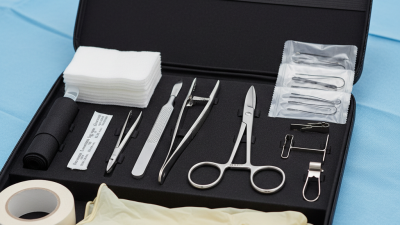
In treatment procedures, specialized instruments can enhance precision. Surgical tools, for instance, allow for minimally invasive techniques. A study published in the Journal of Healthcare Engineering indicates that such techniques reduce recovery time by approximately 50%. However, reliance on advanced technology can lead to challenges. Not all practitioners may be trained adequately to use these instruments, resulting in potential errors.
Patient care also benefits from the integration of medical instruments. Devices like blood glucose monitors empower patients to manage their conditions independently. Reports suggest that self-monitoring can improve adherence to treatment plans substantially. Yet, technology can sometimes complicate communication between healthcare providers and patients. Misunderstandings can arise, especially if patients are not familiar with how to use these devices properly. This gap highlights a need for continuous education in the healthcare sector.
Impact of Advanced Technology on Modern Medical Instruments
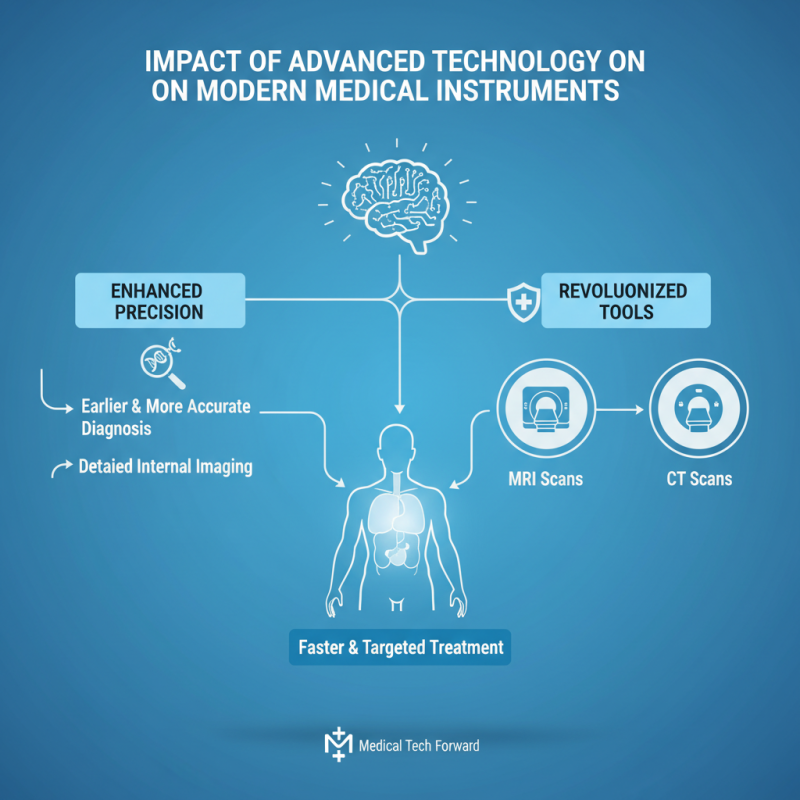
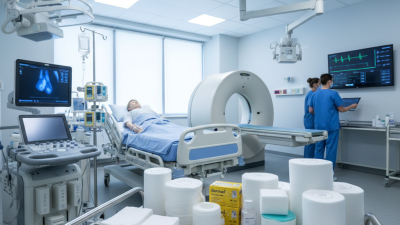
Advanced technology has revolutionized modern medical instruments. These innovations enhance precision in diagnosis and treatment. For instance, imaging tools like MRI and CT scans provide detailed images of the body's internal structures. This allows healthcare professionals to identify conditions earlier and more accurately.
However, the reliance on advanced technology raises questions about accessibility and training. Not all healthcare facilities can afford the latest instruments. In rural areas, patients may face delays in receiving care. Additionally, healthcare workers must continuously adapt to new technologies. This requires ongoing training and education to ensure effective use of these tools.
Despite these challenges, the benefits of advanced medical instruments are significant. They improve patient outcomes and support faster recovery times. Yet, balancing technology with human skill remains essential. Overdependence on machines can sometimes overlook the importance of clinician intuition.
Safety and Efficiency: How Instruments Enhance Patient Outcomes
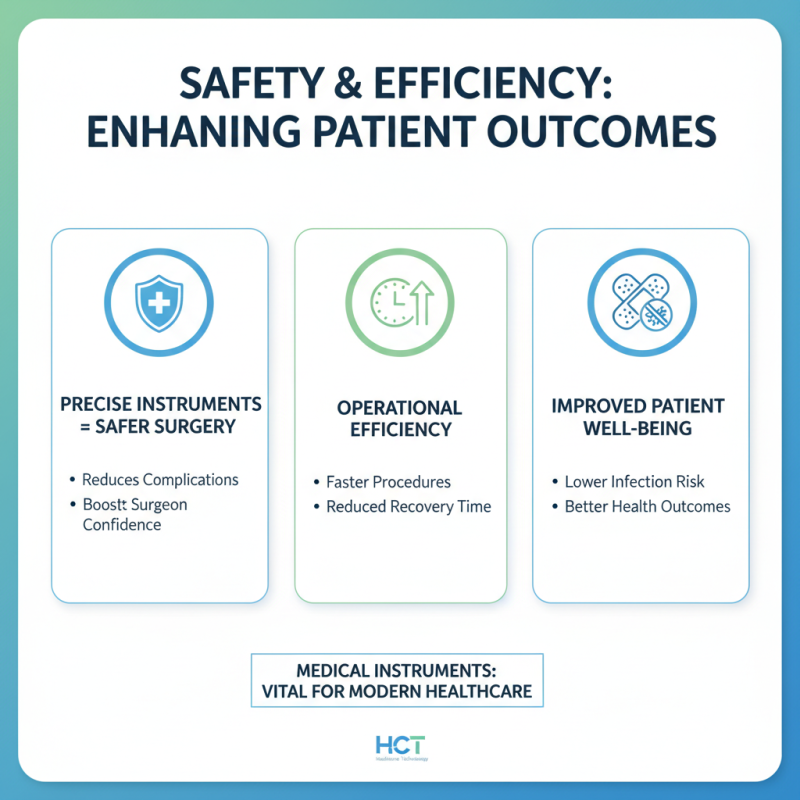
Medical instruments are vital in modern healthcare. They play a crucial role in enhancing patient safety and operational efficiency. For instance, surgical tools must be precise. A small error can lead to complications. When surgeons use reliable instruments, they can perform procedures confidently. This not only reduces recovery time but also lowers the risk of infection.
Additionally, diagnostic tools help in accurate patient assessments. Instruments like ultrasound machines and blood analyzers provide immediate insights. Rapid diagnoses allow for timely treatments, which are essential for critical conditions. However, the reliance on technology presents dilemmas too. Misinterpretation of results can occur. Training and experience are critical to ensure healthcare providers use these instruments correctly.
Moreover, there is an ongoing need for instrument updates and maintenance. Old or faulty equipment can compromise safety. Healthcare facilities must invest in regular checks. A culture of continuous improvement ensures that instrument reliability remains high. Balancing advanced technology with human oversight is essential for quality care.
Future Trends in Medical Instrumentation and Healthcare Innovation
The future of medical instrumentation is rapidly evolving. A recent report from Deloitte indicates that the medical device market could reach $600 billion by 2025. This growth is driven by advancements in technology and a heightened focus on personalized healthcare. Hospitals and clinics are increasingly adopting cutting-edge tools. Innovations such as AI-driven diagnostic devices and wearable health monitors are gaining traction.
Moreover, the integration of telehealth is reshaping the landscape. According to a study by McKinsey, telehealth utilization has stabilized at levels 38 times higher than before the pandemic. This shift signifies a crucial transformation in how healthcare providers deliver services. However, challenges remain. Implementing new technologies requires significant training and adaptation.
Regulatory hurdles can slow down the adoption of these instruments. Continuous education for healthcare professionals is crucial to maintain a high standard of care. The pace of innovation often leads to gaps in understanding. As new devices emerge, ensuring reliability and efficacy becomes paramount. Balancing innovation with patient safety is essential for sustainable growth in this sector.