Why Are Ultrasound Supplies Essential for Healthcare Professionals?
Ultrasound supplies play a crucial role in modern healthcare. According to a report by the Global Market Insights, the ultrasound market is projected to surpass $8 billion by 2025. This growth underscores the increasing reliance on ultrasound technology in various medical fields. Healthcare professionals use these supplies for diagnostics, treatment guidance, and patient monitoring. High-quality ultrasound supplies enhance the accuracy of imaging procedures. This accuracy is vital in making informed decisions regarding patient care.
However, accessibility to these supplies can vary significantly across different healthcare settings. In resource-limited environments, inadequate ultrasound supplies can hinder patient diagnosis and treatment. An estimated 2 billion people lack essential health services, which includes access to quality imaging equipment. This gap highlights the need for improved distribution and availability of ultrasound supplies. As healthcare evolves, it is essential to address these challenges and ensure that all professionals are equipped with effective tools. Ensuring reliable ultrasound supplies can lead to better patient outcomes and more efficient healthcare delivery.

The Vital Role of Ultrasound in Modern Medical Practices
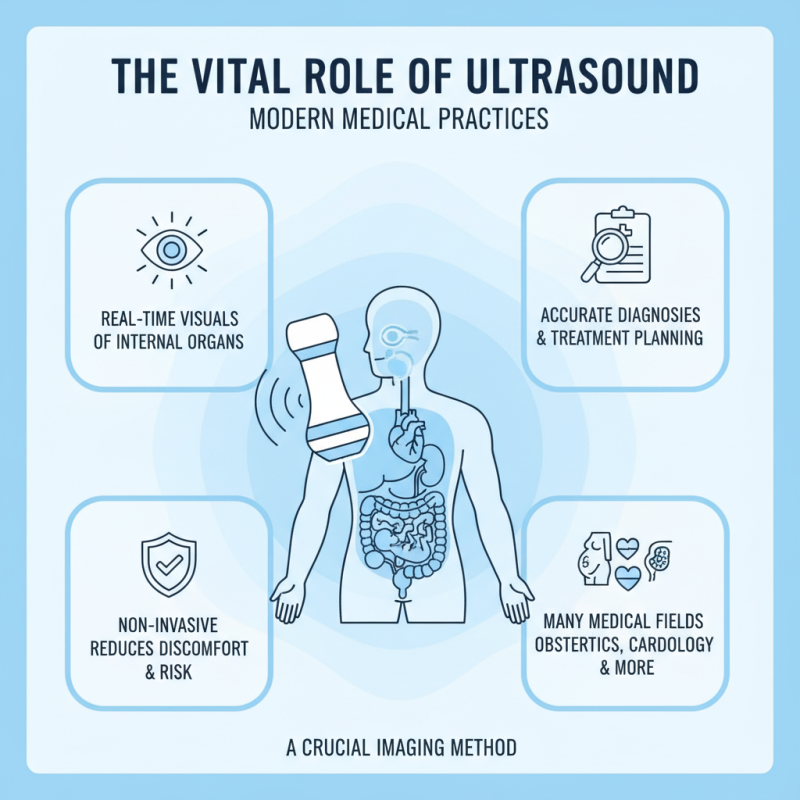
Ultrasound technology plays a crucial role in contemporary medical practices. This imaging method provides real-time visuals of internal organs. Healthcare professionals rely on it for accurate diagnoses and treatment planning. Its non-invasive nature reduces patient discomfort and risk. Many medical fields utilize ultrasound, from obstetrics to cardiology.
In obstetrics, ultrasound monitors fetal development. It helps detect potential complications early. In cardiology, it assesses heart function. Doctors can evaluate blood flow and heart structures. This real-time imaging supports timely interventions. However, the effectiveness of ultrasound depends on proper training and skill. It’s essential for healthcare professionals to continuously enhance their expertise.
While ultrasound supplies are vital, they come with challenges. Equipment maintenance is critical for reliable results. Technological advancements require constant adaptation. Professionals must stay informed about the latest techniques. Continuous education remains important in the ever-evolving medical landscape. Balancing cost-efficiency with quality care is a recurring issue.
Key Ultrasound Supplies and Their Functions in Patient Care
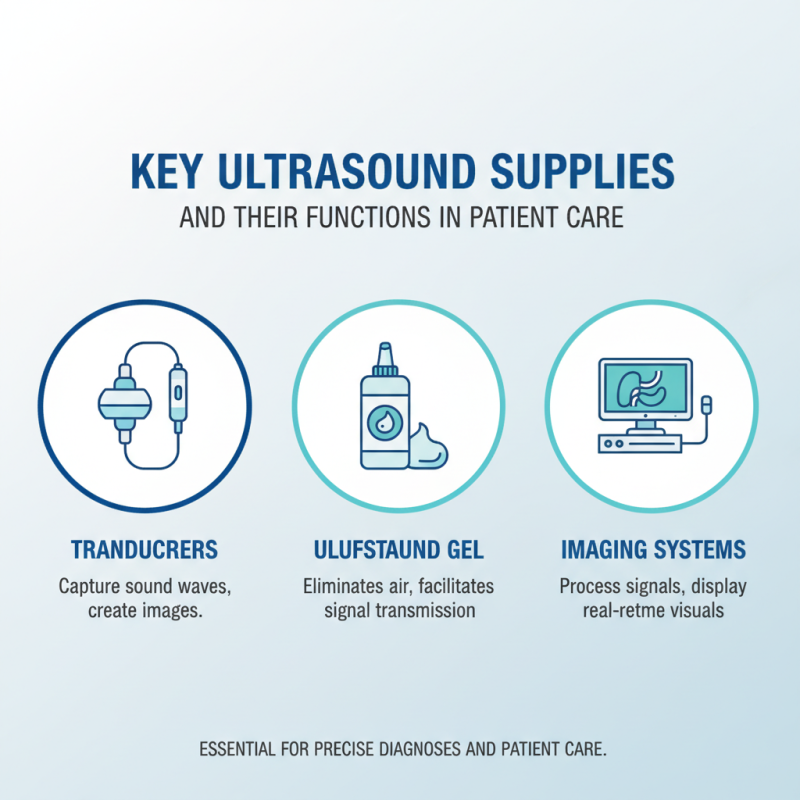
Ultrasound supplies play a crucial role in modern healthcare. These tools help healthcare professionals deliver precise and timely diagnoses. Key ultrasound supplies include transducers, gel, and imaging systems, each vital for optimal patient care.
Transducers are the heart of the ultrasound machine. They convert electrical energy into sound waves. The type of transducer used can affect imaging quality and, ultimately, patient outcomes. A report by the American Institute of Ultrasound in Medicine (AIUM) indicates that effective use of transducers can enhance diagnostic accuracy by up to 25%.
Ultrasound gel is another essential supply. It eliminates air between the transducer and skin. This improves sound wave transmission, ensuring clearer images. Use of appropriate gel can significantly reduce artifacts in imaging.
**Tips:**
Ensure your gel is of high quality. Low-quality gel may impair your imaging effectiveness. Regularly check your transducer for wear and tear that can degrade performance.
Finally, imaging systems have advanced significantly. They offer improved resolution and faster processing times. However, the high complexity of these systems demands continuous training for healthcare professionals. Neglecting this may lead to misuse and lower diagnostic reliability over time.
Statistical Growth of Ultrasound Utilization in Diagnostic Imaging
The rising utilization of ultrasound technology in diagnostic imaging is remarkable. According to a recent report by MarketsandMarkets, the global ultrasound market is projected to grow from $6.9 billion in 2020 to $9.8 billion by 2025. This indicates an annual growth rate of about 7.5%. Such statistics highlight ultrasound’s growing role in medical diagnostics.
Ultrasound is essential for various healthcare applications. It offers non-invasive, real-time imaging solutions. Medical professionals use it for prenatal care, organ assessment, and guiding procedures. The American College of Radiology reports that ultrasound accounts for approximately 30% of imaging studies performed. This percentage reveals its significance in the overall diagnostics landscape.
Despite its advantages, challenges remain. Access to advanced ultrasound training is inconsistent across regions. Many healthcare professionals report a lack of confidence in their ultrasound skills. This gap suggests the need for better educational resources to improve the quality of ultrasound practice. Such efforts can enhance patient care and ensure professionals are equipped with the latest knowledge.
Statistical Growth of Ultrasound Utilization in Diagnostic Imaging
Impact of Ultrasound Technology on Healthcare Cost-Effectiveness
Ultrasound technology has significantly changed
healthcare cost-effectiveness. It is a non-invasive imaging method. Many medical professionals prefer
it for its accuracy and safety. Ultrasound can help diagnose conditions early. This early detection can
lead to better treatment plans. By
catching diseases sooner, healthcare costs can be lowered overall.
Insurance companies often favor ultrasound
over other imaging methods. This preference stems from reduced costs related to patient care. When
patients receive timely care, complications tend to grow less common. Fewer complications mean lower
expenses for healthcare facilities. However, over-relying on ultrasound without confirming through
other tests can be risky.
Training is essential for healthcare professionals using ultrasound technology. Inadequate training
can lead to misinterpretations. Misdiagnoses can increase costs due to unnecessary treatments. Moreover,
not all conditions are detectable by ultrasound. It’s crucial to remain cautious. Therefore, while
ultrasound supplies are vital, professionals must use them
judiciously for the best outcomes.
Training and Compliance: Ensuring Proper Use of Ultrasound Equipment
Ultrasound equipment plays a pivotal role in healthcare. However, the ability to use this technology effectively hinges significantly on proper training and compliance. Healthcare professionals must be well-versed in operating ultrasound machines to ensure accurate diagnostics and patient safety. A minor glitch in technique can lead to misdiagnosis or ineffective treatment.
Training should include hands-on practice under expert supervision. Techniques may differ across various specialties. Regular workshops can help reinforce knowledge. Compliance with operational protocols is equally critical. Adhering to established guidelines boosts the reliability of ultrasound results, fostering a safer environment for both patients and practitioners.
Tips: Always seek out updated educational resources. Collaborate with colleagues for skill enhancement. Encourage a culture of feedback to identify areas for improvement. Regularly review your practice to keep skills sharp. This ensures a solid foundation, ultimately enhancing patient care and safety.