Essential Medical Labels Tips for Accurate Patient Care?
In the realm of healthcare, accurate patient care hinges on effective communication and labeling. Medical labels serve as critical tools in this process. According to a report by the Institute of Medicine, medication errors harm at least 1.5 million people annually in the U.S. alone. A significant number of these errors stem from misunderstandings related to labeling.
Medical labels provide essential information like dosage, administration routes, and patient details. The importance of clear, standardized labeling cannot be overstated. Inadequate labeling can lead to dangerous mix-ups, affecting patient outcomes. Research from the Joint Commission highlighted that improper label use contributes to nearly 30% of medication errors.
Despite recognizing the importance of medical labels, many healthcare professionals overlook best practices. For instance, not all staff members may consistently check labels or verify information before administration. Such lapses can lead to serious consequences. It's crucial to foster a culture that prioritizes attention to detail in labeling. Only through diligent practices can healthcare providers enhance safety and deliver quality patient care.

Understanding the Importance of Medical Labels in Patient Care
Medical labels play a crucial role in patient care. They offer vital information about medications and treatments. Accurate labeling can prevent serious errors. A study by the Institute of Medicine revealed that nearly 1.5 million preventable adverse events occur every year in the U.S. healthcare system. Many of these incidents are linked to labeling mistakes.
Labels must be clear and concise. The use of standard symbols and colors is essential for easy understanding. However, often labels lack crucial details. In a survey, only 30% of nurses reported that medication labels always included necessary information. This gap can lead to confusion and mishandling of patient care.
Visibility is also an issue. In busy healthcare environments, labels can become obscured or unreadable. In some cases, hospital staff overlook labels entirely. This oversight can cost lives. Training staff to prioritize label visibility is vital. Continued education on the importance of accurate labeling can foster a culture of safety and vigilance.
Essential Medical Labels Tips for Accurate Patient Care
This bar chart illustrates the number of reported issues related to medical labels in patient care. Effective labeling is crucial to prevent medication errors, misidentification, dosage mistakes, and ensure allergy alerts are communicated. By understanding these issues, healthcare professionals can improve patient safety and care quality.
Key Elements of Effective Medical Labels for Safety and Clarity
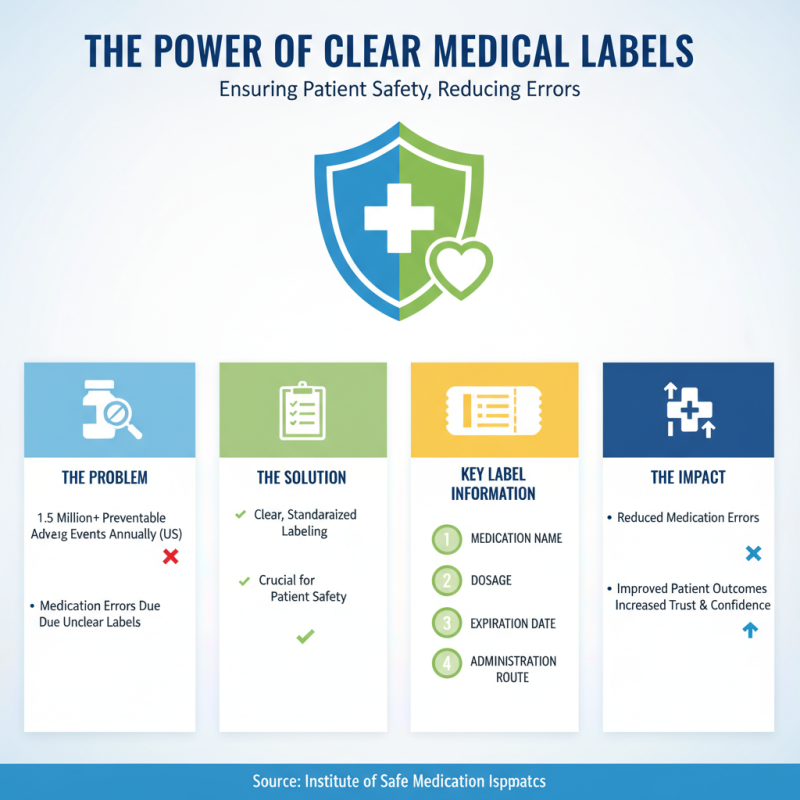
Effective medical labels play a crucial role in ensuring patient safety and clarity in healthcare settings. Clear labeling can reduce medication errors significantly. According to a report by the Institute for Safe Medication Practices, over 1.5 million preventable adverse drug events occur annually in the U.S. alone. This highlights the need for precise labeling practices. Labels should include key information: medication name, dosage, expiration date, and administration route.
Moreover, the format of the label matters greatly. The CDC suggests using large fonts and contrasting colors for easy readability. A study published in the Journal of Patient Safety indicated that 30% of medication errors arise from illegible handwriting or unclear labels. Medical staff should also receive training on proper labeling techniques. Confusion often stems from inconsistent labeling practices across departments. A uniform approach can enhance communication and reduce risk.
Visual cues can aid in comprehension as well. The use of color-coded labels or symbols can convey essential information quickly. For example, red labels might indicate high-alert medications. However, this practice isn’t universally adopted. Organizations must assess their labeling systems regularly to identify gaps and areas for improvement. Addressing these imperfections is necessary for fostering a safer healthcare environment.
Best Practices for Creating Accurate Medical Labels
When creating medical labels, clarity is paramount. Accurate labels prevent misunderstandings. Mistakes can lead to serious consequences. Therefore, attention to detail is essential.
One effective practice is using clear, legible fonts. Avoid overly complex designs that may confuse. Use contrasting colors to enhance visibility. Stick to simple layouts that are easy to read at a glance. Ensure all necessary information is included. For instance, patient details should be precise.
Continuous feedback is also crucial. Review labels regularly for improvements. Involve healthcare professionals in the process. Their insights can highlight common pitfalls. They may notice errors you might overlook. Remember, even small inaccuracies can lead to major issues. Always strive for perfection, but accept that mistakes can happen. Embrace the chance to learn from them.
Essential Medical Labels Tips for Accurate Patient Care - Best Practices for Creating Accurate Medical Labels
| Label Type |
Best Practices |
Common Mistakes |
Usage Examples |
| Patient Identification |
Ensure full name, DOB, and identification number are clear |
Using abbreviations or nicknames |
Wristbands, medication labels |
| Medication Labels |
Include dosage, frequency, and administration route |
Omitting critical dosing information |
Prescription bottles, IV bags |
| Specimen Labels |
Label with date, time, and clinician's name |
Inconsistent labeling practices |
Blood samples, biopsy containers |
| Equipment Labels |
Use clear identification and maintenance info |
Failing to update labels after service |
Surgical instruments, medical devices |
Common Mistakes to Avoid in Medical Labeling
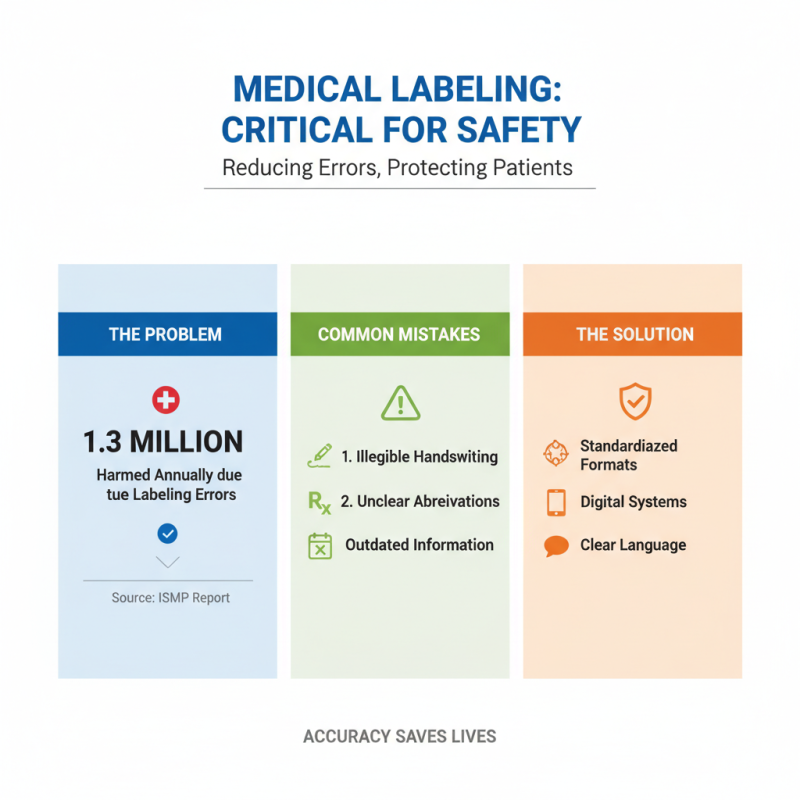
In the world of healthcare, accurate medical labeling is critical. However, many professionals still make common mistakes. According to a report by the Institute for Safe Medication Practices, nearly 1.3 million people are harmed each year due to labeling errors. These mistakes often stem from illegible handwriting, unclear abbreviations, and outdated information.
To improve patient care, clarity is essential. Use standardized abbreviations and formats. Ensure labels clearly indicate the patient's name, medication, dosage, and administration route. These details cannot be overlooked. Neglecting to include important information can lead to serious consequences.
Tips for effective labeling include double-checking each label for accuracy. Always verify information against electronic health records. Additionally, consider utilizing barcode systems to minimize human error, as studies show they reduce adverse events significantly. The goal is not only to keep patients safe but also to foster an environment where everyone feels confident in their care. Being meticulous today will enhance outcomes tomorrow.
Regulatory Guidelines and Standards for Medical Labeling
In the realm of healthcare, medical labeling plays a critical role.
Accurate labels enhance patient safety. They prevent medication errors and ensure proper treatment.
Regulatory guidelines shape how labels are created. Key standards often emphasize clarity and consistency.
Labels must convey essential information quickly and efficiently.
Regulatory bodies require labels to feature active ingredients, usage instructions, and warning statements.
Some labels also include batch numbers and expiration dates.
However, inconsistencies can still arise.
A lack of standardized formats may confuse healthcare providers. Labels can become cluttered with unnecessary details.
Providers must navigate these complexities to ensure patient care remains paramount.
Furthermore, healthcare professionals must regularly review and refresh their labeling practices.
This ensures compliance with evolving guidelines. It’s easy to overlook small details in a busy environment.
Regular training sessions could help reinforce best practices.
Balancing regulatory compliance with practical application is challenging, yet essential in maintaining patient safety.