Call us on 01707 385 226

How to Choose the Best Paramedic Supplies Worldwide?

Choosing the best paramedic supplies worldwide requires more than comparing prices or counting product features. Field experience shows that reliable equipment must work under pressure, poor weather, limited lighting, and repeated cleaning. A sturdy trauma bag, clear labels, secure fasteners, and gloves that maintain grip can save valuable seconds during emergency care. Small details matter.

Professional selection begins with the patient, the response environment, and the team’s training. Essential supplies may include wound dressings, airway support tools, diagnostic devices, splints, protective equipment, and organized medication storage. Every item should come from a traceable manufacturer with clear instructions, quality documentation, and dependable customer support. Local medical regulations, product certifications, import rules, and disposal requirements must also be checked before purchase. Requirements differ across countries.

No checklist is perfect. A supply kit that works well for an urban ambulance may fail in remote terrain or extreme heat. Teams should test equipment during realistic drills, record weak points, and review stock levels after every deployment. Independent clinical guidance and recognized standards can strengthen purchasing decisions, but practical feedback remains essential. The cheapest option may create hidden costs through breakage, replacement, or delayed treatment. Reliable paramedic supplies should therefore balance safety, usability, durability, training needs, and long-term value. Careful evaluation builds trust between suppliers, responders, and patients.
How to Choose the Best Paramedic Supplies Worldwide?

Define the Role and Scope of Paramedic Supplies

How to Choose the Best Paramedic Supplies Worldwide?

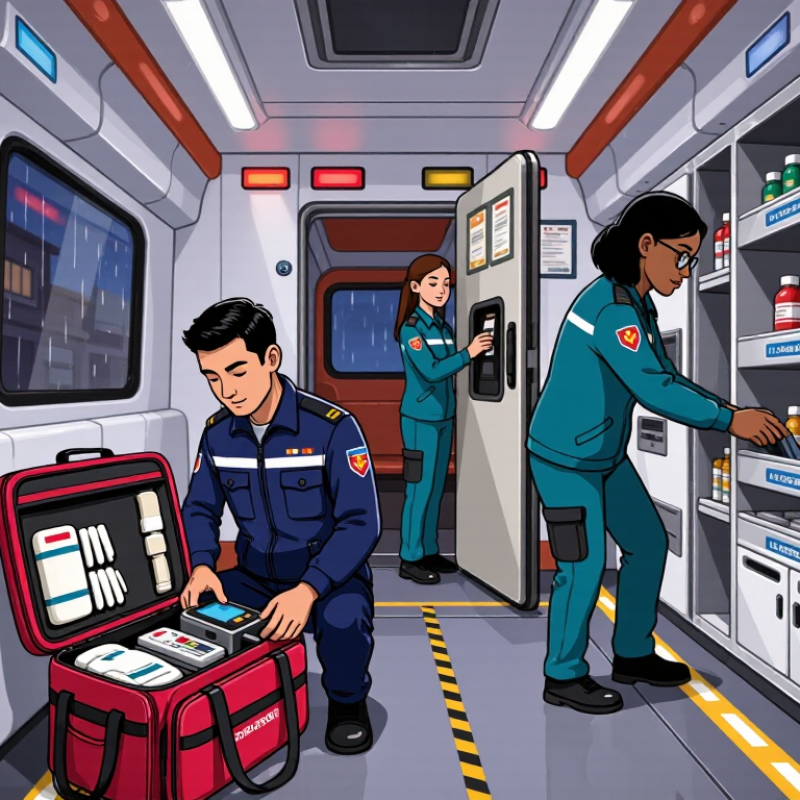
Paramedic supplies support assessment, emergency care, patient movement, communication, and accurate documentation. Their role begins before treatment. Teams need equipment that works in ambulances, public spaces, remote roads, and crowded buildings. A reliable kit should include airway tools, bleeding-control materials, protective equipment, diagnostic devices, dressings, splints, and secure storage. Each item must match the team’s training and authorized clinical scope.

Good selection starts with patient needs, not product appearance. A blood pressure cuff should fit adults and children. A thermometer should remain readable in poor lighting. Gloves need durable material, suitable sizing, and easy access. Devices require clear instructions, routine checks, and safe battery storage. Supplies should also tolerate vibration, moisture, temperature changes, and repeated cleaning. Field protocols, local requirements, and current clinical guidance should shape every purchasing decision.

No kit is perfect. A checklist can still miss a pediatric cuff, spare batteries, or a simple marker for documentation. That weakness deserves review. Experienced supervisors can inspect expiry dates, packaging, stock levels, and equipment condition after each shift. Staff training matters equally. Even advanced equipment becomes unreliable when users lack practice. Choose supplies that are practical, traceable, and easy to replace, while recording inspection results and reporting failures honestly.

Assess Clinical Needs, Risks, and Operational Conditions

Choosing paramedic supplies starts with the patient, not the catalogue. Assess common call types, age groups, trauma patterns, and clinical protocols. A rural ambulance may need compact airway tools and durable lighting. An urban team may require rapid bleeding control, monitoring, and pediatric equipment. WHO reports that about one in ten patients experiences harm during healthcare, with more than half considered preventable (WHO Global Patient Safety Action Plan 2021–2030). Safer selection therefore includes clear labeling, fail-safe design, and training compatibility.

Risk assessment must include contamination, temperature, vibration, and delayed restocking. WHO’s Global Report on Infection Prevention and Control estimates healthcare-associated infections affect 7 in 100 acute-care patients in high-income countries and 15 in 100 in low- and middle-income countries. Choose supplies that support hand hygiene, sealed storage, sharps safety, and simple waste handling. Small details matter. Wet gloves are not a minor problem.

Operational conditions can quietly defeat excellent equipment. Check vehicle space, battery access, oxygen compatibility, local water quality, and replacement times. Supplies should remain usable during heat, dust, rain, and unstable electricity. Review incident reports with clinicians, not only procurement staff. Data may be incomplete. That weakness deserves attention. Test equipment during realistic drills, record failures, and revise the list after difficult calls. A lightweight kit is useful, but removing rarely used items may create dangerous gaps. Assessment should remain practical, documented, and open to correction.

Compare Quality, Safety Standards, and Product Durability

How to Choose the Best Paramedic Supplies Worldwide?

Quality is more than a clean package or a low price. Check material specifications, lot traceability, expiry dates, and clear instructions. The WHO Global Patient Safety Report 2024 states that about one in ten patients experiences harm during healthcare, with more than half considered preventable. Reliable supplies can reduce avoidable failures during urgent care.

Safety standards provide a practical comparison. For sterile products, review ISO 11607 packaging requirements and evidence of seal integrity. For electrical equipment, check relevant IEC 60601 testing and documented risk controls under ISO 14971. Gloves should meet recognized barrier and performance standards, such as EN 455 or equivalent national requirements. Ask for test reports, not vague claims. Small details matter.

Durability must match real ambulance conditions. Examine drop resistance, temperature tolerance, battery life, moisture protection, and repeated cleaning performance. ASTM D4169 distribution testing can indicate whether packaging survives transport shocks. Field audits often find damaged seals or missing accessories after rough journeys. That is an uncomfortable weakness. A product may pass a laboratory test yet fail after months in a crowded response bag. Inspect samples personally, record failure rates, and review supplier corrective actions. Durability is proven in use, not promised in advertising.

Evaluate Suppliers, Costs, Availability, and Global Logistics

Choosing paramedic supplies worldwide requires more than comparing product photos and unit prices. A dependable supplier should provide clear specifications, quality certificates, batch records, and realistic expiry dates. Ask whether the supplier can support urgent orders, replacement requests, and technical questions after delivery. In field purchasing, traceability matters. Each carton should be easy to identify and inspect.

Cost calculations must include freight, insurance, customs processing, storage, and possible currency changes. A low quote can still become expensive after delays or damaged packaging. I once treated the cheapest offer as the best option. That was a mistake. Request samples when practical, then examine seals, labels, dimensions, and usability with trained staff. Small defects become serious during a busy emergency response.

Availability also depends on production capacity and regional stock. Confirm minimum order quantities, lead times, holiday closures, and backup inventory. For international shipping, review packing strength, moisture protection, temperature requirements, and delivery tracking. Some supplies may lose reliability after prolonged heat exposure. Keep written records of every promise. Verbal assurances are easy to misunderstand across time zones. A supplier’s history can help, but recent performance matters more. Ask for references from comparable healthcare organizations, while checking those claims independently. Build a modest buffer for critical items, because perfect forecasting is rarely realistic. Difficult lesson. Reliability needs evidence.

How to Choose the Best Paramedic Supplies Worldwide? — Evaluate Suppliers, Costs, Availability, and Global Logistics
Supply Category Typical Items Key Quality and Compliance Checks Indicative Unit Cost (USD) Typical Shelf Life Recommended Stock Level Typical International Lead Time Logistics and Storage Considerations Supplier Selection Priority
Airway Management Oropharyngeal airways, nasopharyngeal airways, supraglottic airways, manual resuscitation bags Verify intended-use labeling, size range, latex status, sterile packaging where applicable, and quality-management certification such as ISO 13485. $1.50–$90 per item, depending on device type and configuration Usually 3–5 years for sterile disposable products Maintain at least 2–4 weeks of average consumption plus emergency reserve 2–8 weeks for standard orders; longer when regulatory review is required Keep sealed sterile products dry and within the temperature limits stated on the label. Avoid crushing flexible packaging. High clinical priority
Oxygen and Respiratory Care Oxygen masks, nasal cannulas, regulators, flowmeters, portable oxygen cylinders Check pressure ratings, connector compatibility, oxygen-clean requirements, cylinder test dates, and local rules for compressed-gas transport. $2–$250 per item; cylinder pricing varies substantially by material and capacity Consumables commonly 3–5 years; cylinders require periodic inspection Calculate demand by patient volume, transport duration, and cylinder refill capacity 1–6 weeks; hazardous-goods handling can add time Compressed oxygen is regulated cargo in many jurisdictions. Use approved packaging, ventilation, segregation, and trained carriers. High logistics priority
Bleeding Control and Wound Care Trauma dressings, gauze, tourniquets, pressure bandages, burn dressings, adhesive tape Confirm sterile status, lot traceability, absorbency or compression claims, material compatibility, and resistance to moisture damage. $0.20–$45 per item Commonly 3–5 years for sterile dressings Stock according to trauma-call frequency; keep multiple sizes and at least one reserve kit per response vehicle 2–6 weeks for regular replenishment Store in a clean, dry area away from direct sunlight. Use FEFO—first expiry, first out—for sterile products. High availability priority
Immobilization and Patient Transport Splints, cervical collars, pelvic binders, scoop stretchers, evacuation chairs Assess load ratings, adjustment range, radiolucency where relevant, cleaning instructions, durability, and compatibility with existing stretchers. $8–$1,200 per item Reusable equipment is condition-based rather than expiry-based Provide vehicle-specific quantities plus backup equipment at the station 3–10 weeks because of size, customization, or lower production volume Oversized items may require dimensional-weight freight. Confirm pallet dimensions and access requirements before ordering. Durability priority
Monitoring and Diagnostic Devices Pulse oximeters, blood-pressure monitors, thermometers, glucometers, ECG or vital-sign monitors Review accuracy specifications, calibration procedures, battery type, software support, electrical safety, and applicable market authorization. $15–$4,000 per device Typically 2–7 years of operational use; sensors and batteries may require earlier replacement Use a device-to-vehicle ratio based on deployment model, with calibrated backup units 2–12 weeks; technical configuration and local registration may extend delivery Protect electronics from extreme heat, moisture, shock, and magnetic or electromagnetic interference. Plan calibration intervals. Verification priority
PPE and Infection Prevention Examination gloves, respirators, surgical masks, eye protection, gowns, hand antiseptic Check material, size range, barrier claims, test standards, packaging integrity, allergen information, and local PPE requirements. $0.05–$35 per item Often 2–5 years, depending on material and manufacturer labeling Hold 4–8 weeks of normal use and a contingency reserve for outbreaks or disasters 1–6 weeks during normal market conditions; shortages can cause major delays Store away from heat, sunlight, ozone, moisture, and chemicals. Use carton-level expiry and lot tracking. Supply continuity priority
Emergency Medications and Consumables Prefilled syringes, IV sets, needles, cannulas, fluid bags, medication-storage accessories Confirm national registration, prescription or controlled-substance requirements, sterility, tamper evidence, lot tracking, and cold-chain needs. $0.30–$120 per item, excluding controlled or specialized medicines Frequently 12–36 months; follow the labeled expiry date Set minimum and maximum levels using clinical protocols, usage history, and expiry risk 2–10 weeks; medicines may require import permits and additional documentation Temperature-sensitive products may require validated packaging, data loggers, and documented chain of custody. Regulatory priority
Communication, Lighting, and Power Headlamps, scene lights, radios, spare batteries, chargers, power banks Check ingress protection, impact resistance, battery transport classification, charging standards, runtime, and interoperability. $10–$900 per item Equipment commonly 3–8 years; rechargeable batteries often require replacement sooner Keep spare charging capability and backup batteries for each operational team 2–8 weeks; lithium-battery shipping rules may affect transport mode Lithium batteries may be regulated as dangerous goods. Confirm UN test documentation and carrier acceptance before dispatch. Operational resilience priority
Supplier Evaluation Manufacturer, authorized distributor, regional wholesaler, or emergency-stock provider Compare traceability, quality certificates, complaint handling, recall procedures, product documentation, references, and after-sales support. Evaluate total landed cost rather than purchase price alone Require written expiry guarantees for dated products Use dual sourcing for critical items and qualify an alternative supplier before shortages occur Measure quoted lead time, historical on-time delivery, customs performance, and replenishment capacity Review Incoterms, export documents, HS classification, insurance, customs brokerage, and delivery to the final facility. Strategic priority
Cost and lead-time note: The figures are indicative planning ranges for generic paramedic supplies and can vary by specification, order quantity, regulatory market, freight mode, taxes, customs duties, exchange rates, and emergency demand. Confirm current quotations, expiry guarantees, and import requirements before purchase.

Build a Practical Selection and Maintenance Plan

Choose paramedic supplies by clinical risk, not by catalogue size. Map likely calls, travel distance, climate, and crew skills.

A roadside kit needs airway tools, bleeding-control materials, thermal protection, and reliable lighting. Keep high-use items visible. Store fragile items in padded, sealed compartments.

The WHO Global Status Report on Road Safety 2023 records about 1.19 million road deaths annually. Readiness cannot depend on luck.

Set minimum stock levels for dressings, gloves, syringes, batteries, and oxygen accessories. Record lot numbers and expiry dates. Check oxygen pressure, battery charge, package integrity, and device alarms at every shift change.

Use a weekly detailed inspection. A monthly review should test calibration and replace damaged parts. Some kits look complete.

Cleaning needs equal attention.

The WHO Global Report on Infection Prevention and Control, 2022, estimates healthcare-associated infections affect 7 in 100 acute-care patients in high-income countries and 15 in 100 in low- and middle-income countries.

Use written cleaning steps for reusable equipment, with approved contact times and drying areas. Separate clean and used equipment during transport.

Temperature-sensitive items need a simple exposure log. Review failures without blaming staff.

A checklist can still fail when nobody owns it. Assign one clinician and one technical reviewer, then audit missed checks, stock-outs, and expired items every quarter.

We use cookies to ensure that we give you the best experience on our website.