How to Choose the Right Medical and Surgical Supplies for Your Needs?
Choosing the right medical and surgical supplies is crucial for ensuring effective care. Various factors influence this decision. Your specific needs, the nature of procedures, and available options should align. Evaluating these supplies requires knowledge and understanding.
Look for products that meet industry standards. Quality often impacts patient outcomes. Not all supplies are created equal. Researching suppliers may help uncover reliable options. Check for certifications and reviews. Engage with professionals who have firsthand experience. Their input can guide your choices.
Take time to assess your requirements. Keep in mind that availability and cost also play roles. Sometimes, budget constraints may lead to compromises. Yet, prioritizing patient safety should remain central. Invest the necessary effort to ensure the best outcomes for all.
Understanding Your Specific Medical and Surgical Needs
Choosing the right medical and surgical supplies starts with understanding your specific needs. Assess the type of procedure or treatment you will undergo. Different conditions require different tools. For example, wound care might need dressings and antiseptics, while surgical needs could necessitate sutures or scalpels. It is essential to know the details of your medical situation.
Communicating with healthcare providers is crucial. They can guide you on what supplies are necessary based on your health status. Don’t hesitate to ask questions. Inadequate supplies can hinder recovery. Additionally, consider your comfort and safety. Quality materials reduce the risk of complications. Keep in mind that not all products are created equal.
Sometimes, people overlook the importance of proper supply selection. Rushing into choices can lead to mistakes. Reflect on past experiences. Have you ever had an issue because the right supplies weren't used? Learning from these instances is key. Balancing quality with cost is a challenge. However, investing in the right supplies is a decision that pays off in better outcomes.
How to Choose the Right Medical and Surgical Supplies for Your Needs?
| Category |
Example Products |
Considerations |
Common Uses |
| Personal Protective Equipment (PPE) |
Masks, Gloves, Gowns |
Protection level, material type |
Infection control, surgical procedures |
| Surgical Instruments |
Scalpels, Forceps, Scissors |
Material, sterilization method |
Surgical operations, wound care |
| Diagnostic Equipment |
Stethoscopes, Thermometers |
Accuracy, ease of use |
Routine check-ups, patient assessments |
| Dressing Supplies |
Bandages, Gauze, Tape |
Adhesion, absorbency |
Wound management, post-operative care |
| Mobility Aids |
Wheelchairs, Crutches |
Weight capacity, portability |
Patient transport, rehabilitation |
Evaluating Quality Standards and Certifications in Medical Supplies
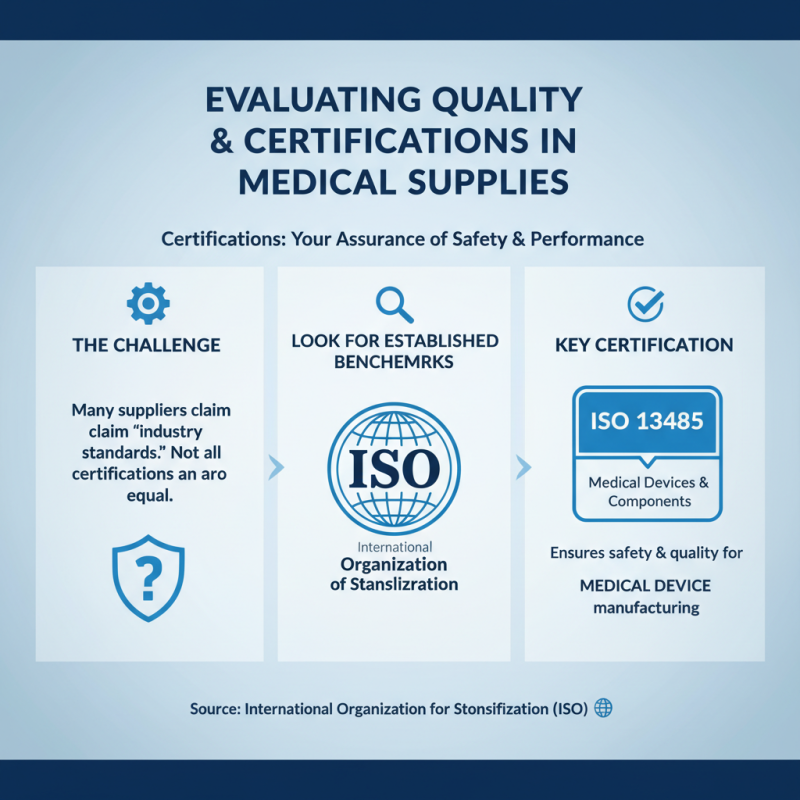
When evaluating quality standards in medical and surgical supplies, certifications play a crucial role. Many suppliers offer products that claim to meet industry standards. However, not all certifications are created equal. The International Organization for Standardization (ISO) establishes benchmarks for quality. For example, ISO 13485 is designed for manufacturers of medical devices and components. Only those that comply can assure users of safety and performance.
Reports indicate that about 23% of medical supply recalls are due to compliance issues. This highlights the importance of verifying certifications. Always check for claims of compliance with standards like the FDA’s 510(k) premarket notification. This process ensures products are safe and effective. It may seem tedious, but the safety of patients depends on it.
Quality assessments are not just about certifications. It's also about choosing suppliers who prioritize transparency. Some companies may misstate their compliance. Regular audits, user reviews, and industry references can help identify trustworthy suppliers. Trust but verify. Awareness of potential gaps maintains a standard of care that patients deserve.
Comparing Cost-Effectiveness of Different Medical Supply Brands
When choosing medical and surgical supplies, cost-effectiveness is crucial. Not all brands offer the same value, even if they seem similar. It’s essential to compare pricing and quality. Sometimes, the cheapest option does not provide the best performance or safety. Take time to analyze suppliers based on reviews and ratings.
Tips: Prioritize essential features that you require in your supplies. Some items are non-negotiable for your safety and effectiveness. Seek out vendor comparisons online. These can reveal insights about long-term costs and reliability which aren't always clear upfront.
Different brands may have varying standards. Always assess each product’s specifications. A less reputable brand may save money initially but could lead to increased expenditures later due to failures or replacements. Constantly reflect on your choices and adapt as you learn from experience. Does the supply meet your expectations during usage? Your evaluations can inform future purchases.
Analyzing Patient Safety Considerations in Supply Selection
When selecting medical and surgical supplies, patient safety should be the top priority. The reliability of materials can significantly impact patient outcomes. Consider the health risks associated with certain supplies. Using outdated or faulty equipment can lead to severe complications. For example, surgical instruments must maintain their integrity and sterility. Any lapse in quality can jeopardize patient safety.
Moreover, understanding the specific needs of your patient population is crucial. Different demographics may require tailored supplies. Pediatric patients often need smaller, more sensitive instruments. In contrast, geriatric patients may benefit from ergonomically designed tools. Failure to adapt can result in unnecessary discomfort or even harm. Reflecting on past choices can highlight areas for improvement.
Additionally, engage with healthcare professionals to gather insight. Their expertise can guide your supply selection process. Trustworthy sources of information are essential. Review safety records and previous usage outcomes for each supply option. This diligence can prevent adverse effects and enhance overall safety. Balancing cost and quality is challenging yet necessary for minimizing risks. Prioritize well-being above all to ensure effective healthcare delivery.
Patient Safety Considerations in Medical and Surgical Supplies Selection
Staying Updated on Industry Innovations and Trends in Medical Supplies
As the medical industry evolves, staying updated on trends in medical supplies is crucial. According to a recent report by Grand View Research, the global medical supplies market is projected to reach $202 billion by 2025. This growth is driven by technological advancements and an increasing demand for home healthcare. It’s essential for medical professionals to understand these shifts.
Innovations such as telehealth and wearable devices are changing how supplies are used. Studies show that telehealth services surged by 154% in 2020. These trends indicate a shift towards more integrated healthcare solutions. Yet, with rapid changes, there's a risk of overwhelmed professionals struggling to keep up. Regular training and educational resources can help mitigate this challenge.
Moreover, healthcare providers must consider the sourcing of supplies. A report from Research and Markets suggests that eco-friendly and sustainable products are gaining traction. Patients increasingly prefer supplies that prioritize sustainability. However, finding reliable suppliers who meet these standards can be difficult. It’s a delicate balance between innovation and practical application.