Choosing the right medical instruments supplier requires more than comparing catalog prices. Hospitals need dependable devices, traceable documentation, responsive service, and evidence of quality. A supplier may offer advanced surgical tools, diagnostic systems, or patient-monitoring equipment. Yet performance depends on training, maintenance, calibration, and local support.
The World Health Organization estimates that more than two million medical devices exist worldwide, covering over 7,000 generic device groups. That scale makes supplier evaluation difficult. Market reports also show strong industry growth. Fortune Business Insights valued the global medical devices market at approximately US$512 billion in 2024. Grand View Research reported a different estimate, reflecting different definitions and market boundaries. The figures are not perfectly aligned. That is important.
This guide examines ten leading medical instruments suppliers across global markets. The comparison considers product breadth, manufacturing capacity, regulatory quality systems, innovation, distribution reach, and after-sales support. Public company filings, official certifications, and established industry research inform the discussion. Experience from clinical procurement also suggests a practical lesson: the cheapest quotation may create higher lifecycle costs. Delayed spare parts can stop a procedure. Inconsistent calibration can weaken diagnostic confidence. No supplier is perfect. Regional availability, service response, and product suitability still require careful verification. Buyers should confirm current approvals, warranty terms, training options, and replacement-part access before making a decision. These details often matter more than polished marketing language.
Evaluating medical instrument suppliers requires more than comparing prices. Experienced procurement teams examine product safety, clinical usefulness, and manufacturing consistency. A supplier should provide clear technical files, calibration records, and traceability documents. These records show where materials originated and how each instrument was tested. Independent audits can verify whether quality procedures operate beyond written policies.
Regulatory readiness also matters across different markets. Suppliers should understand local registration rules, labeling requirements, and import documentation. Their certificates must be current and independently verifiable. Ask how they manage complaints, product recalls, and corrective actions. Weak answers deserve attention. A polished website cannot replace measurable evidence.
Service quality often separates reliable suppliers from ordinary ones. Evaluate response times, spare-part availability, user training, and maintenance support. Request references from hospitals with similar clinical needs. Speak with users, not only sales representatives. A trial order may reveal packaging damage, unclear instructions, or inconsistent delivery schedules. These details affect patient care and staff confidence.
Financial stability should also be reviewed, especially for long-term supply contracts. Sudden production changes can disrupt essential procedures. Assess backup manufacturing plans and communication during shortages. No scorecard is perfect. Supplier performance can change after approval, so periodic audits remain necessary. A careful evaluation combines documents, real-world testing, professional feedback, and honest recognition of uncertainty.
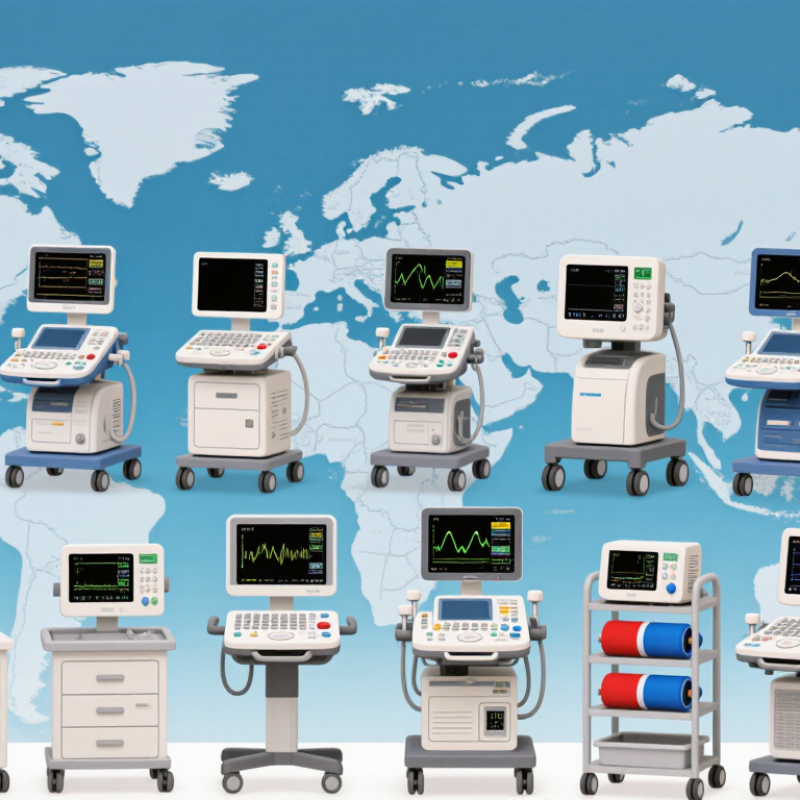
The ten best medical instrument suppliers are rarely defined by catalog size alone. Strong suppliers organize products around clinical tasks, safety controls, and service support. Their key categories include patient monitoring, diagnostic imaging, surgical instruments, laboratory analyzers, sterilization equipment, and rehabilitation devices. A dependable supplier explains intended use, material quality, calibration intervals, and operator training in clear language. That detail matters when a monitor sits beside a noisy emergency bed.
Current technologies range from noninvasive sensors and wireless vital-sign transmission to digital microscopy, automated sample handling, and image-guided procedures. Many suppliers now offer cloud-connected dashboards, barcode tracking, predictive maintenance, and software that flags unusual readings. However, connectivity is not automatically better. Hospitals must review data security, interoperability, backup procedures, and access permissions before deployment. A useful demonstration should show cleaning, battery changes, alarm settings, and results under normal workload. Short demos mislead.
From a buyer’s perspective, reliable suppliers provide installation records, traceability documents, technical support, spare parts, and responsive complaint handling. They also publish evidence for accuracy and performance rather than relying on impressive claims. I would compare warranty terms, validation assistance, local service capacity, and total ownership cost. The cheapest analyzer can become expensive when consumables arrive late. No supplier is perfect. A careful review should question vague specifications and test workflow fit with nurses, technicians, and physicians. That human feedback often reveals awkward screens, fragile connectors, or unnecessary steps before purchase.
The chart summarizes major medical instrument categories and the number of representative technology families commonly supplied across the global healthcare market. The counts reflect the technology families listed for each category, not company sales, market share, or brand performance.
Global medical instrument suppliers differ by clinical focus, manufacturing depth, and service coverage. One leading profile may specialize in digital imaging systems, with clear calibration records and responsive field engineers. Another may provide surgical instruments designed for repeated sterilization and precise handling. A third may focus on patient monitoring, offering alarms, bedside displays, and data integration. These details matter in busy hospitals.
Other strong suppliers serve laboratory diagnostics, sterilization, dental care, orthopedics, respiratory therapy, infusion management, and physical rehabilitation. Laboratory suppliers should show method validation, quality controls, and stable reagent support. Sterilization specialists need dependable cycle monitoring and maintenance training. Orthopedic suppliers require accurate sizing systems and practical clinician education. Rehabilitation suppliers often stand out through adjustable equipment and measurable therapy outcomes. Ten leading global profiles should describe more than product categories.
Evidence builds trust. Procurement teams should examine regulatory documentation, user feedback, warranty terms, spare-part access, and response times in their region. A supplier may have excellent instruments but weak local support. That weakness can interrupt treatment. No supplier is flawless. Catalogues also hide installation challenges, staff training gaps, and compatibility problems. Experienced buyers should request demonstrations, inspect sample records, and compare total ownership costs. Independent clinical advice remains valuable, especially when a familiar device seems convenient but lacks strong long-term evidence.
| Profile | Primary Operating Region | Main Instrument Categories | Typical Clinical Applications | Quality and Compliance Frameworks | Regulatory Markets Commonly Served | Manufacturing and Supply Capabilities | Technical and After-Sales Services |
|---|---|---|---|---|---|---|---|
| Supplier Profile 01 | North America | Patient monitoring Electrocardiography Vital-sign equipment | Emergency departments, intensive care units, operating rooms, and general wards | ISO 13485-based quality management; risk management aligned with ISO 14971; electrical safety testing under applicable IEC standards | United States, Canada, Europe, Asia-Pacific, and selected Middle Eastern markets | In-house product development combined with controlled component sourcing and global distribution partnerships | Installation, calibration, preventive maintenance, user training, software support, and replacement-part programs |
| Supplier Profile 02 | Western Europe | Surgical instruments Operating-room systems Sterilization accessories | General surgery, orthopedics, minimally invasive procedures, and sterile processing departments | ISO 13485 quality systems; EU Medical Device Regulation requirements; documented sterilization and traceability controls | European Union, United Kingdom, North America, Asia-Pacific, and Latin America | Precision machining, reusable-instrument production, sterile packaging, and distributor-based international fulfillment | Instrument repair, refurbishment, sterilization guidance, product traceability, and operating-room workflow support |
| Supplier Profile 03 | East Asia | Ultrasound systems Diagnostic imaging Imaging probes | Radiology, obstetrics, cardiology, emergency medicine, and point-of-care diagnostics | ISO 13485; electromagnetic compatibility testing; software lifecycle controls based on recognized medical-device practices | Asia-Pacific, Europe, North America, Latin America, and emerging healthcare markets | High-volume electronics assembly, transducer development, embedded software integration, and export logistics | Application training, image-quality optimization, probe servicing, firmware updates, and remote technical assistance |
| Supplier Profile 04 | Northern Europe | Respiratory-care devices Ventilation equipment Sleep-diagnostic systems | Critical care, respiratory therapy, sleep medicine, home care, and hospital transport | ISO 13485; ISO 14971 risk management; usability engineering and electrical safety requirements for connected medical devices | Europe, North America, Australia, selected Asian markets, and international humanitarian programs | Specialized engineering, sensor integration, single-use accessory supply, and hospital as well as home-care channels | Clinical education, device configuration, consumables management, preventive maintenance, and fleet monitoring support |
| Supplier Profile 05 | Central Europe | Laboratory analyzers Diagnostic consumables Sample-processing equipment | Clinical chemistry, hematology, microbiology, pathology, and hospital laboratories | ISO 13485; quality-control procedures for in-vitro diagnostic products; documented lot traceability and analytical validation | European Union, United States, Canada, Asia-Pacific, and regulated public-health laboratories | Automated instrument assembly, reagent and consumable production, calibration management, and laboratory distribution networks | Installation qualification, operator training, assay support, calibration, connectivity integration, and service contracts |
| Supplier Profile 06 | Japan and broader Asia-Pacific | Endoscopy equipment Surgical visualization Imaging accessories | Gastroenterology, pulmonology, urology, surgery, and diagnostic visualization procedures | ISO 13485; reprocessing and infection-control documentation; optical, electrical, and software verification procedures | Japan, Asia-Pacific, Europe, North America, and specialist healthcare markets worldwide | Optical engineering, precision electronics, reusable equipment production, and specialized service-center networks | Reprocessing education, image-quality checks, scope repair, preventive servicing, and procedure-specific training |
| Supplier Profile 07 | United Kingdom and Ireland | Infusion systems Syringe pumps Drug-delivery accessories | Hospitals, oncology units, intensive care, anesthesia, neonatal care, and home infusion | ISO 13485; medication-safety risk controls; alarm verification, software validation, and electrical safety testing | United Kingdom, Europe, North America, Australia, Asia-Pacific, and public-sector healthcare systems | Precision pump manufacturing, disposable-set supply, clinical software integration, and hospital procurement support | Drug-library configuration, device networking, alarm training, calibration, field servicing, and user competency programs |
| Supplier Profile 08 | Scandinavia and Northern Europe | Patient-care furniture Mobility equipment Rehabilitation instruments | Acute care, long-term care, rehabilitation centers, home care, and elder-care facilities | ISO 13485 or equivalent medical-device quality controls; mechanical safety, usability, and biocompatibility assessments where applicable | Europe, North America, Australia, selected Middle Eastern markets, and institutional-care sectors | Mechanical engineering, modular product configuration, ergonomic design, and project-based institutional delivery | Site assessment, installation, staff instruction, refurbishment, spare-parts supply, and lifecycle maintenance |
| Supplier Profile 09 | South Korea and East Asia | Patient monitoring Digital diagnostics Connected health devices | Hospitals, outpatient clinics, remote monitoring programs, emergency care, and community health services | ISO 13485; cybersecurity and software lifecycle controls; electromagnetic compatibility and data-integrity testing | Asia-Pacific, Europe, North America, Latin America, and digitally enabled healthcare networks | Electronics manufacturing, sensor integration, cloud-connected platforms, application programming interfaces, and export distribution | System integration, cybersecurity updates, remote diagnostics, data-interface support, and clinical workflow training |
| Supplier Profile 10 | India and South Asia | Basic diagnostic equipment Hospital instruments Point-of-care devices | Primary-care clinics, diagnostic centers, district hospitals, emergency services, and mobile medical units | ISO 13485 or equivalent quality management; applicable national registration; electrical safety and performance verification | South Asia, Africa, the Middle East, Southeast Asia, and price-sensitive public-health markets | Cost-efficient assembly, locally sourced components, contract manufacturing, bulk procurement, and regional distribution | On-site installation, operator training, basic calibration, warranty repair, consumables supply, and regional service coverage |
Choosing the ten best medical instrument suppliers worldwide requires more than comparing prices. Quality begins with controlled materials, calibrated equipment, and documented inspections. Ask for ISO 13485 certification, current audit records, and traceability from raw material to shipment. A reliable supplier should explain sterilization validation, packaging integrity, and storage limits clearly. Small details matter.
Regulatory compliance must match the destination market and device risk class. For European distribution, review conformity under the Medical Device Regulation and verify appropriate CE documentation. For the United States, confirm whether the device needs clearance, approval, registration, or another pathway. Use accredited certification databases and national regulator records. Never accept a certificate screenshot without checking its issuer, scope, expiry date, and product coverage. Suppliers should maintain complaint handling, adverse-event reporting, corrective actions, and change-control procedures. These records reveal maturity.
During evaluation, request samples and inspect edges, joints, markings, and operating instructions. Compare sample performance with the technical file, not only the sales catalogue. Independent laboratory testing can confirm biocompatibility, electrical safety, accuracy, or resistance to repeated cleaning. I once considered a polished audit package sufficient; that was too optimistic. Factory visits, follow-up questions, and periodic requalification often expose gaps hidden by paperwork. A defensible top-ten list should reflect verified performance, not impressive claims.
Choosing the right medical instruments supplier requires more than comparing prices.
Procurement teams should assess product accuracy, manufacturing controls, and after-sales support. Request calibration records, quality certificates, and clear batch traceability. A reliable supplier should explain how instruments are tested before shipment. Ask for samples when practical. A catalog can look impressive, but real performance may differ.
Compare delivery times, minimum order quantities, warranty terms, and replacement procedures. Check whether the supplier can maintain stable quality during larger orders. Speak with current healthcare customers, if references are available. Their feedback may reveal packaging problems, delayed responses, or difficult returns. Review technical support carefully. Hospitals need answers when an instrument fails during a busy shift. Total cost matters more than the initial quotation, especially when maintenance and training are included.
Tips: Build a weighted supplier scorecard. Include quality, lead time, service, and cost. Keep the scoring evidence-based. Do not let one attractive discount control the decision. A useful test is a small pilot order, followed by inspection of packaging, labeling, documentation, and product consistency. Procurement teams should also revisit supplier performance every few months. Some assumptions will be wrong. That is normal, but ignoring the warning signs is not.
© 2025 Henleys Medical Supplies | Website Cookies & Privacy Policy | Company Privacy Notice | Terms of Sale | Cancellation & Returns | Company Reg No. 452882 | Vat No. GB229 2540 68 | Web design by Cariad Marketing